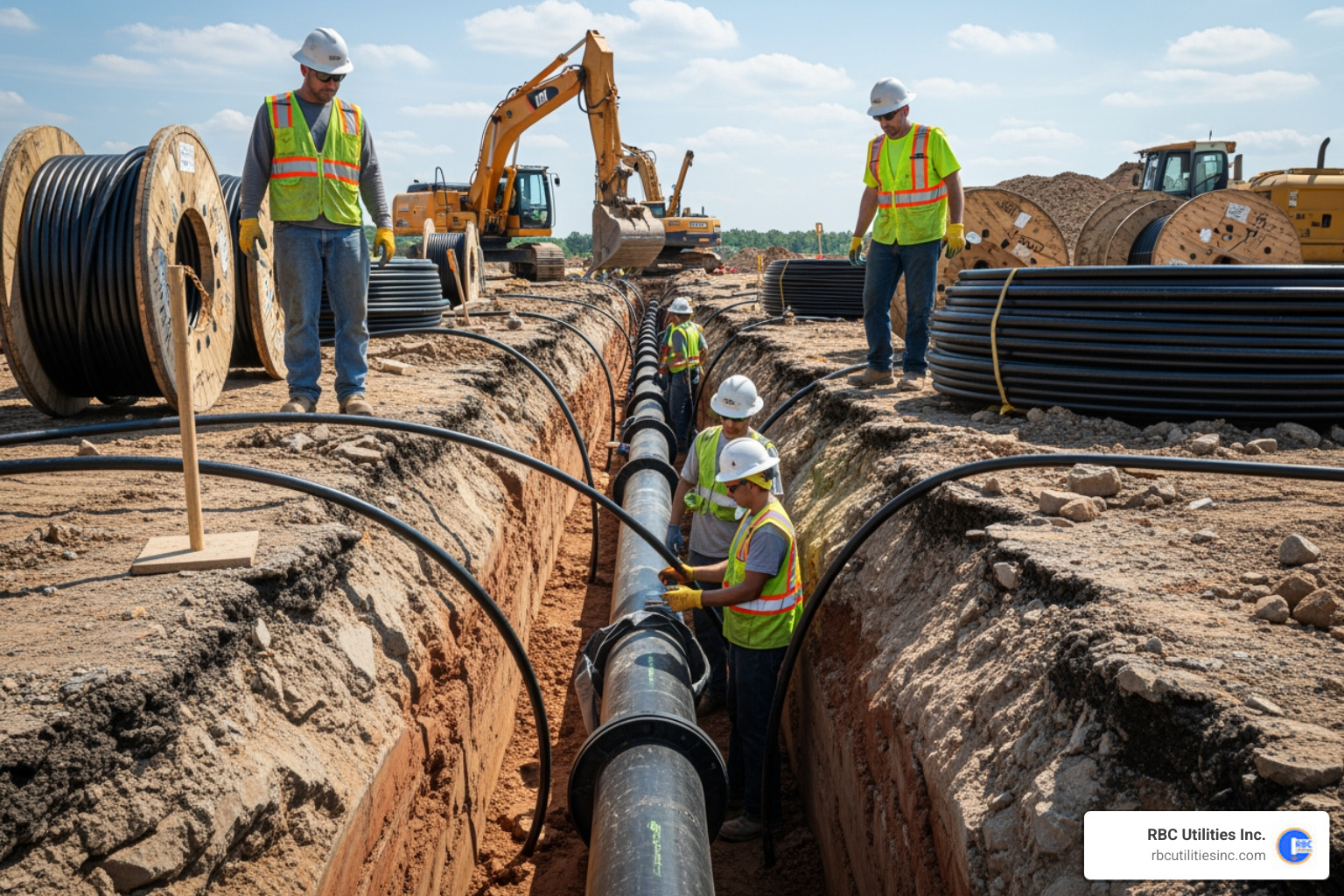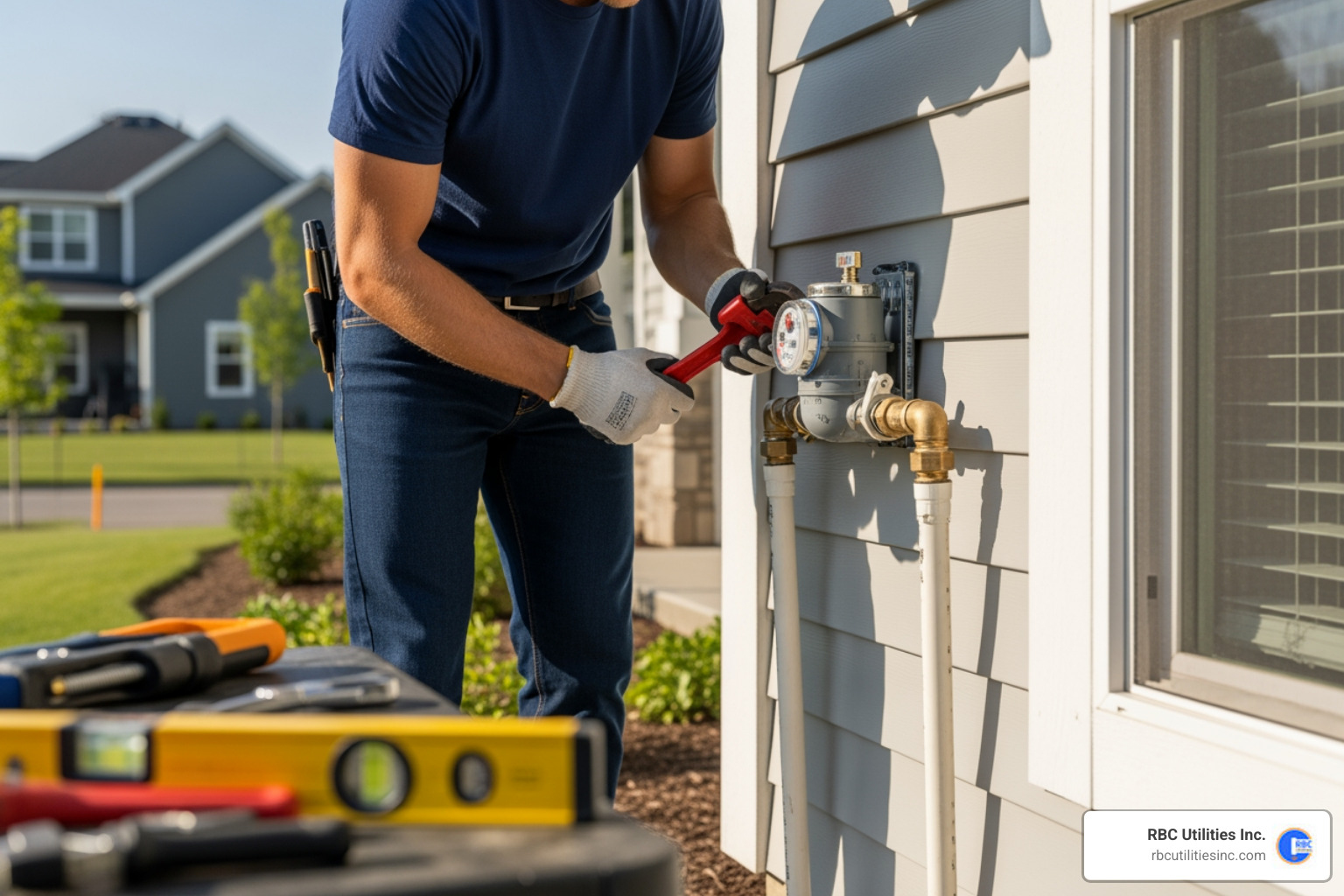
Water meter installation services cover everything from brand-new meter setups to full smart meter upgrades — and getting them right directly affects billing accuracy, code compliance, and long-term water system reliability.
Here's a quick overview of what these services include:
Most water meters last 10 to 20 years before mechanical accuracy starts to slip. When that happens, under- or over-billing becomes a real risk — and for a developer managing multiple residential or commercial units, that's a serious problem.
Whether you're breaking ground on a new subdivision or upgrading aging infrastructure on a commercial site, understanding how meter installation works — and who's responsible for what — can save you significant time, money, and headaches.
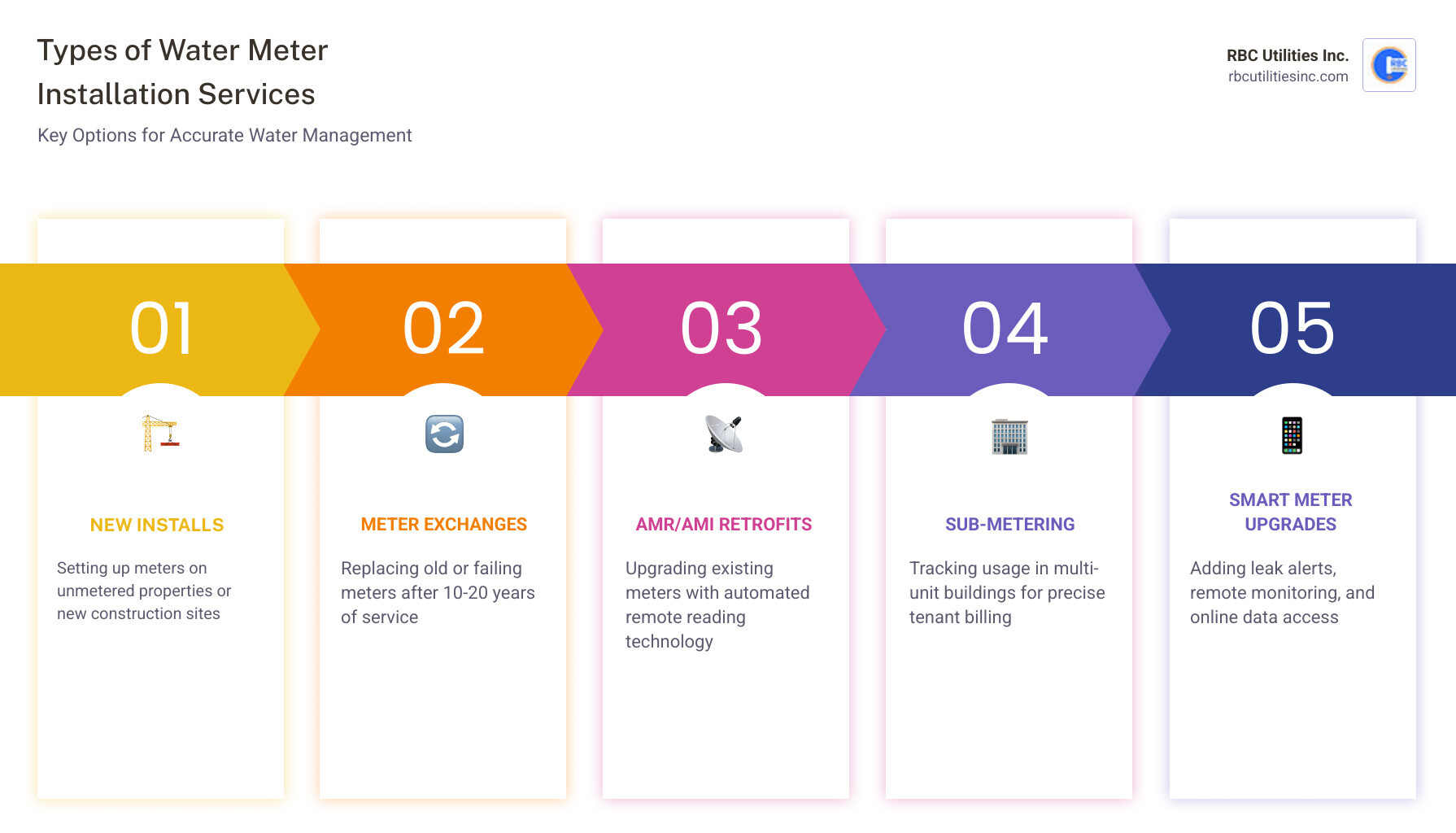
In the Carolinas, the demand for reliable water meter installation services is growing alongside our expanding residential and commercial landscapes. Not every meter project is the same; depending on the age of the infrastructure or the specific needs of a development, we see several distinct types of service requests.
For new construction projects in cities like Charlotte, the process begins with new installs. This involves tapping into the municipal water main and setting up the initial metering infrastructure for a home or business. However, for established neighborhoods, meter exchanges are more common. These are necessary when an existing unit reaches the end of its functional life—usually between 15 and 20 years—and starts to lose its mechanical precision.
Beyond simple swaps, we also handle:
One of the biggest shifts in the industry is the move toward automated data collection. AMR (Automated Meter Reading) and AMI (Advanced Metering Infrastructure) retrofits allow utilities to gather usage data without a technician physically walking up to every meter.
By installing modules like the Itron series or Neptune R900 radio devices, we can turn a traditional "dumb" meter into a smart one. These devices use 900 MHz radio frequencies to transmit data. In fact, over 100 million of these radio devices are currently deployed across North America, proving the reliability of the technology. These retrofits are often the most cost-effective way to modernize existing infrastructure because they don't always require replacing the entire meter body—just the register or the communication module.
For property managers and developers in North and South Carolina, sub-metering is a game-changer. Instead of one master meter for an entire apartment complex or shopping center, individual units are equipped with their own meters.
This allows for:
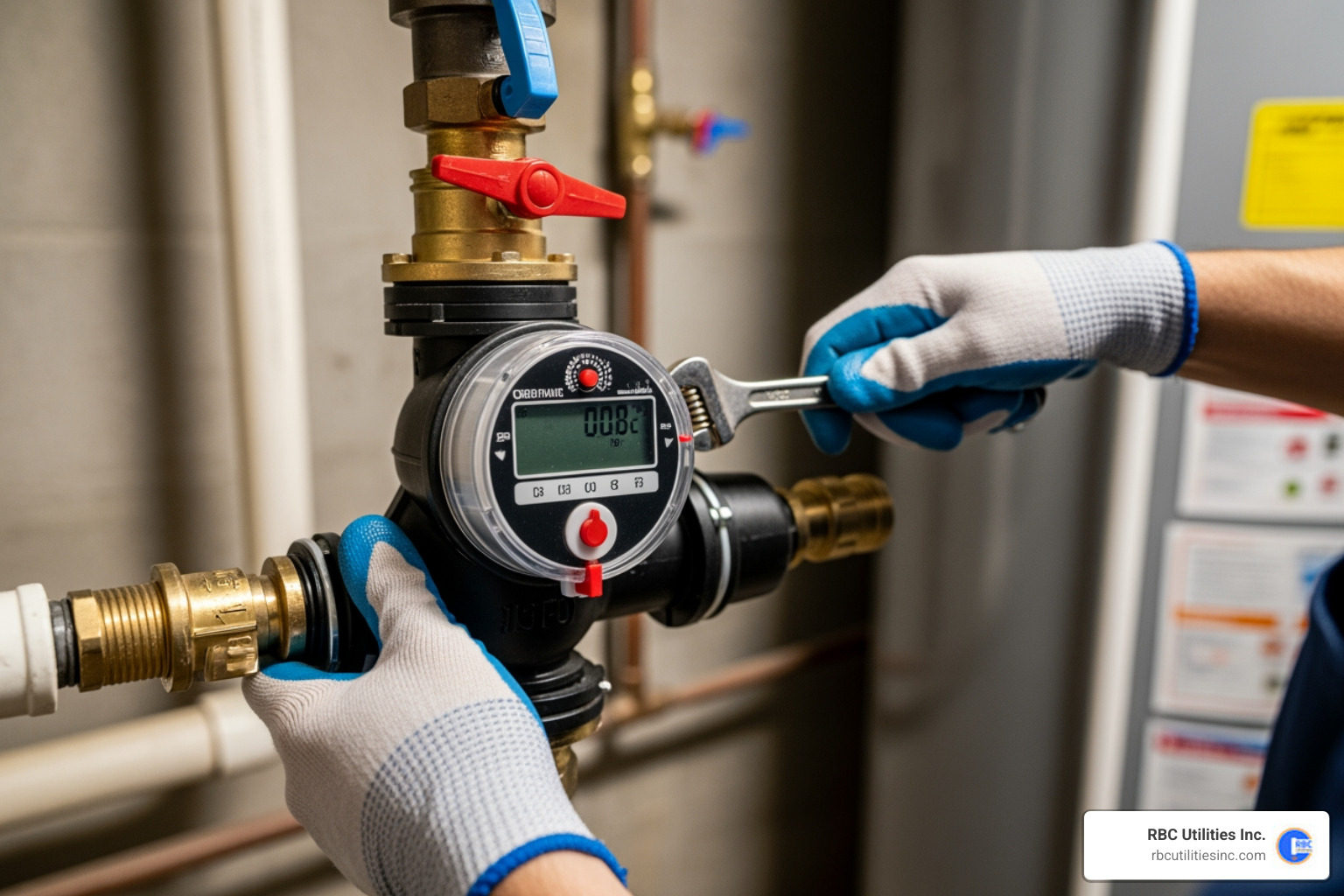
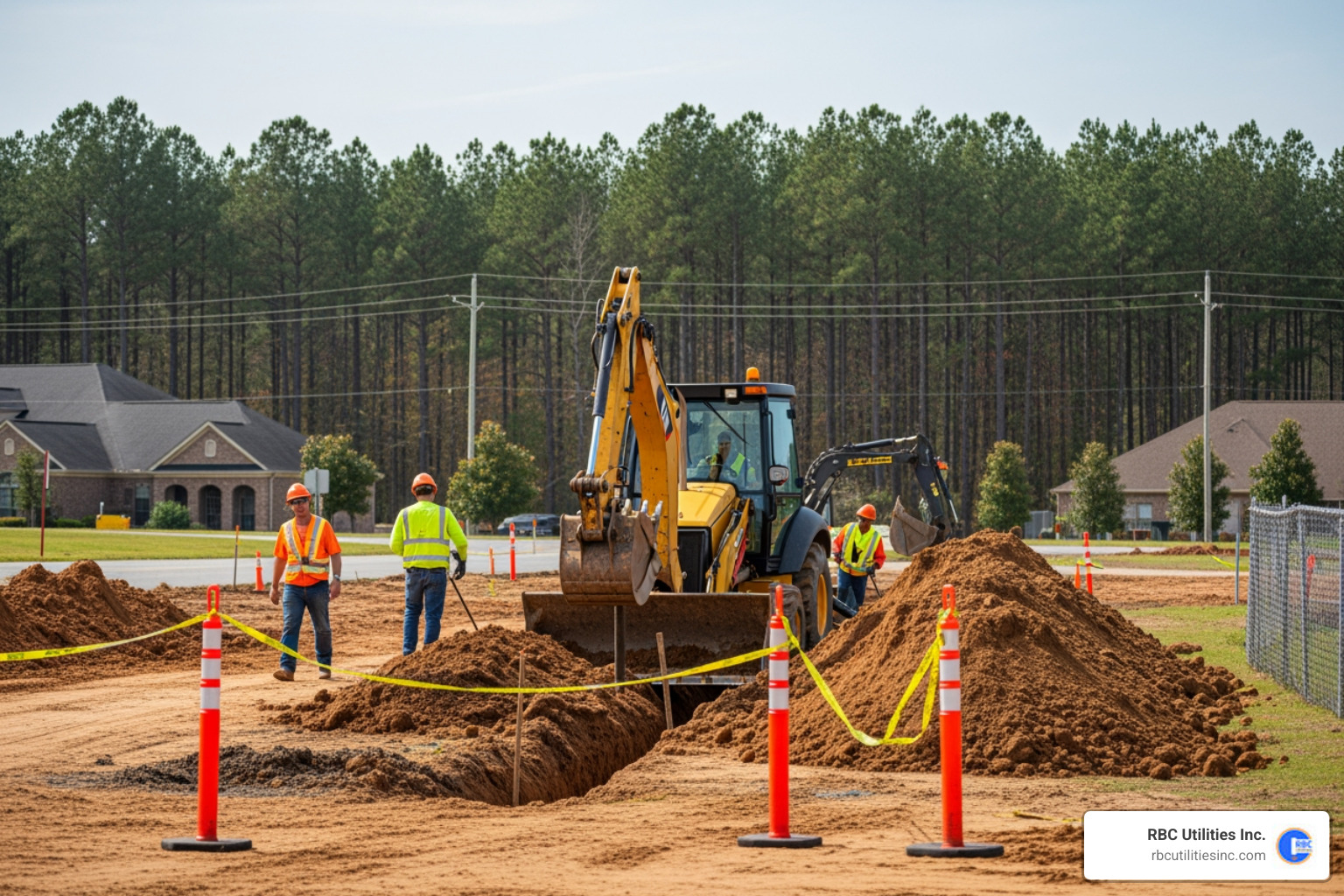
When we arrive for a water meter installation, the process is streamlined to minimize disruption. A typical residential installation or exchange usually takes about 30 minutes to an hour, though complex commercial setups or new construction taps can take longer—sometimes 2 to 4 hours depending on the plumbing condition.
The professional process involves several critical steps:
Ensuring ENSIGHT+ Safety Standards is a top priority during every step of the process. From wearing the correct Personal Protective Equipment (PPE) to conducting daily safety briefings, a professional approach ensures the job is done right without accidents.
If you are a homeowner or a site manager preparing for a meter technician, a little preparation goes a long way. To ensure a smooth visit, please consider the following:
Safety isn't just about the pipes; it's about the people. Reputable contractors will always arrive in marked vehicles and wear clear technician identification badges. This is especially important given the rise in door-to-door utility scams.
We emphasize a "safety-first" culture, which includes:
Knowing when to call for water meter installation services can prevent a massive headache down the line. While many people ignore their water meter until a pipe bursts, proactive replacement is much smarter.
The general rule of thumb is that water meters have a 15 to 20-year lifespan. However, many experts recommend an upgrade after 10 years. Why? Because most meters are mechanical. Over time, the internal moving parts wear down, causing the meter to "slow down." While this might sound like it would save you money, it often leads to "estimated" billing from the utility company, which can result in a massive corrective bill later on.
| Feature | Traditional Mechanical Meter | Smart Ultrasonic Meter |
|---|---|---|
| Moving Parts | Yes (prone to wear) | No (uses sound waves) |
| Lifespan | 10-15 years | 20+ years |
| Accuracy | Decreases over time | Remains consistent |
| Leak Detection | Manual observation only | Automatic digital alerts |
| Data Frequency | Monthly (manual read) | Hourly/Daily (remote) |
The latest generation of smart meters offers more than just usage tracking. These devices are sophisticated pieces of technology that provide:
If you notice any of the following, it’s time to call for a professional inspection:
One of the most common questions we hear is: "Who pays for this?" The answer depends on the situation.
In many municipal programs (like those seen in Charlotte or Raleigh), the utility company may initiate a mandatory upgrade program. In these cases, the meter and the labor are typically provided at no cost to the resident. However, the homeowner is generally responsible for the plumbing pipes leading up to and away from the meter. If those pipes are corroded or not up to code, the homeowner must pay a licensed plumber to fix them before the meter can be installed.
For new construction or private sub-metering, the developer or property owner bears the cost. This includes:
For developers in the Carolinas, coordinating water meter installation services is a critical path item. You can't get a Certificate of Occupancy without water!
We recommend providing at least 2 to 4 weeks' notice when requesting a new residential install. You’ll need your building permit number and confirmation of payment for the meter ready. For non-residential or large-scale commercial projects, that lead time can jump to 6 months due to the complexity of the vault and main line connections.
While mandatory utility-led upgrades are often free, private installations (like adding a second meter for a pool or irrigation) involve fees.
Yes. Modern smart meters, like the Neptune R900, use low-power radio frequency (RF) to transmit data. These devices transmit for less than one minute total per day in tiny 7-millisecond bursts. According to the World Health Organization (WHO) and the FCC, the RF exposure from a water meter at one foot away is about 0.08 mW/cm²—which is 8 times lower than the FCC's conservative safety limits. It’s significantly less exposure than you get from a cell phone or a microwave oven.
Typically, the utility company owns the meter itself, while the homeowner owns the pipes and the meter box (the pit). If the meter fails due to old age, the utility usually replaces it. However, if the meter is damaged by the homeowner (e.g., by freezing because the box wasn't insulated or by hitting it with a lawnmower), the homeowner may be billed for the replacement.
Look for a company with deep roots in the Carolinas. You want a team that understands local soil conditions, municipal codes, and has established relationships with manufacturers like Sensus or Itron. Check for a strong safety record—specifically zero OSHA violations—and ensure they are licensed and insured for underground utility work.
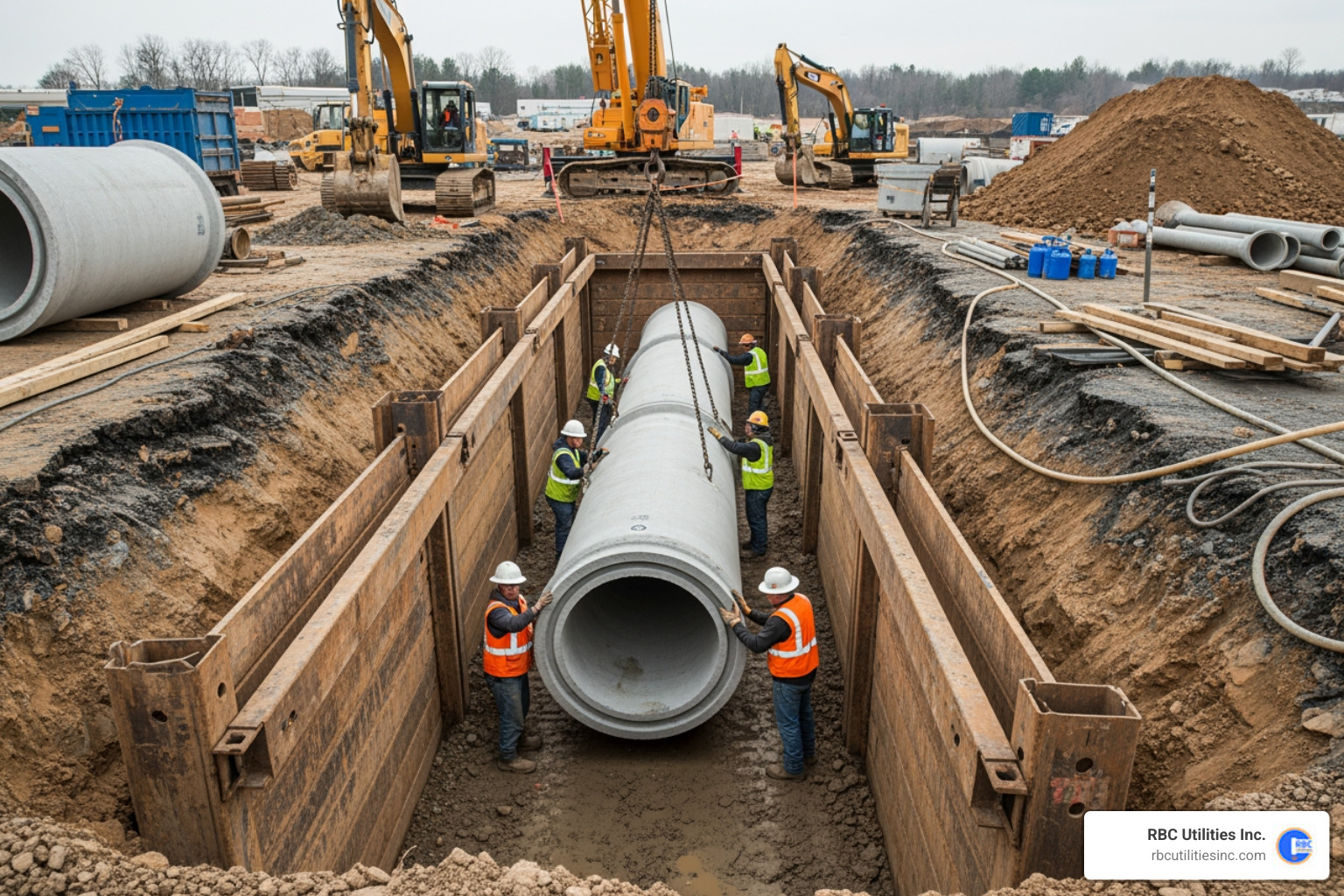
At RBC Utilities Inc., we understand that water is the lifeblood of any Carolinas community. Whether we are laying miles of pipe for a new municipal project in Charlotte or installing smart meters for a commercial development in South Carolina, our focus remains on safety, reliability, and precision.
Building the infrastructure of the Carolinas requires more than just heavy machinery; it requires a commitment to the communities we serve. By choosing professional water meter installation services, you are investing in the long-term accuracy and sustainability of your project’s water system. Backed by the national resources of Saga Infrastructure, we bring local expertise and a safety-first culture to every job site.
Part of Saga Infrastructure, protecting what others built and helping it grow.
Address: 4404 Stuart Andrews Blvd., Suite K, Charlotte, NC 28217
Email: info@rbcutilitiesinc.com
Phone: 803-913-9727
Service Area: North Carolina | South Carolina