Water main contractors carolinas developers and general contractors rely on can mean the difference between a project that stays on schedule and one that grinds to a halt.
Here are the top things to know right away:
The Carolinas are growing fast. New subdivisions, commercial hubs, and expanding municipalities all need reliable underground water infrastructure to function. Without it, nothing else gets built.
But not every contractor has the crew, equipment, and credentials to handle complex water main work. Some projects involve large-diameter transmission mains, difficult soil conditions, or tight urban corridors where a single mistake causes costly delays.
That's why choosing the right partner matters so much. Experienced contractors in the region bring decades of field knowledge, specialized equipment, and a proven track record across both states.
This guide breaks down exactly what to look for — and who's doing the work right.
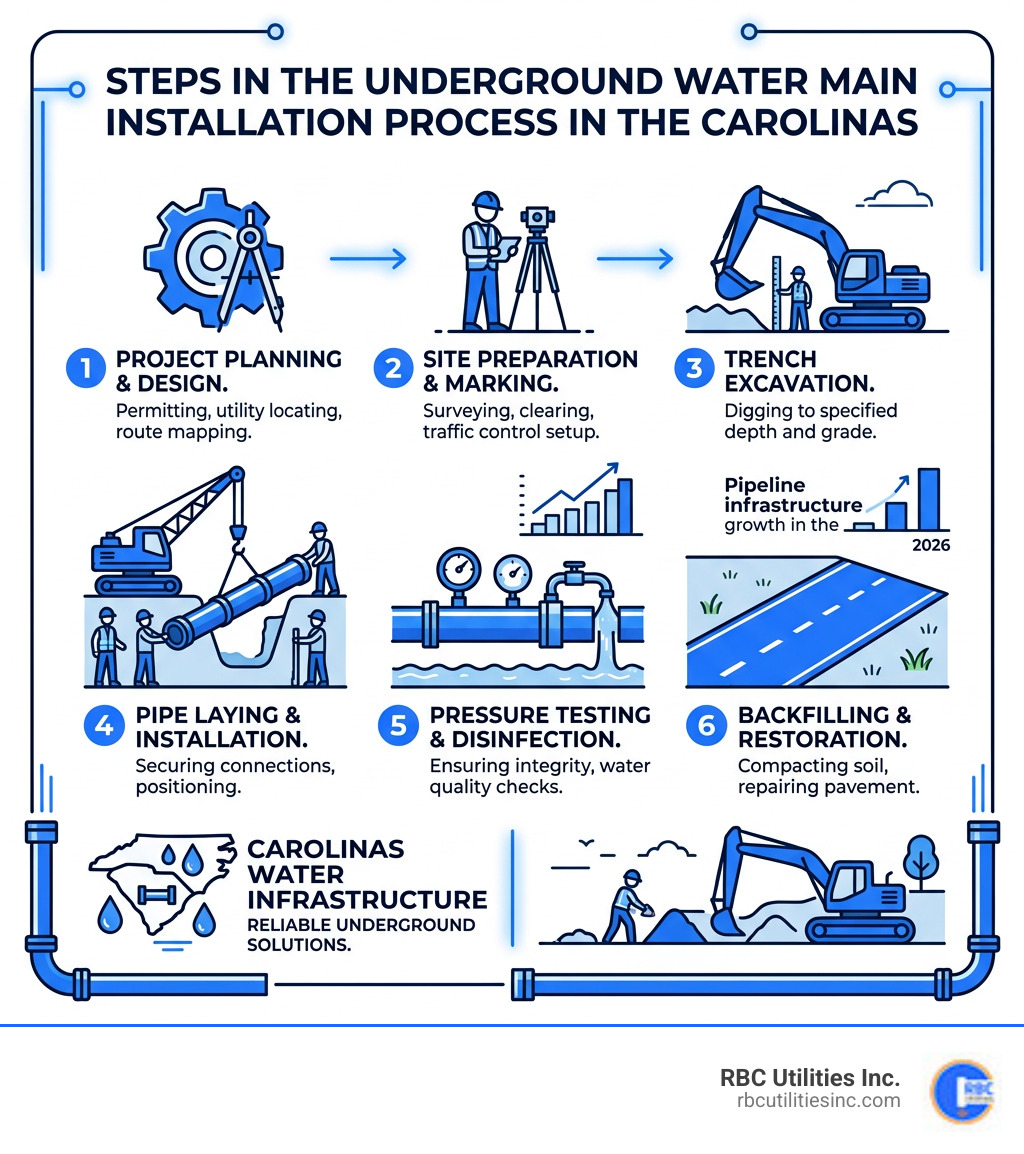
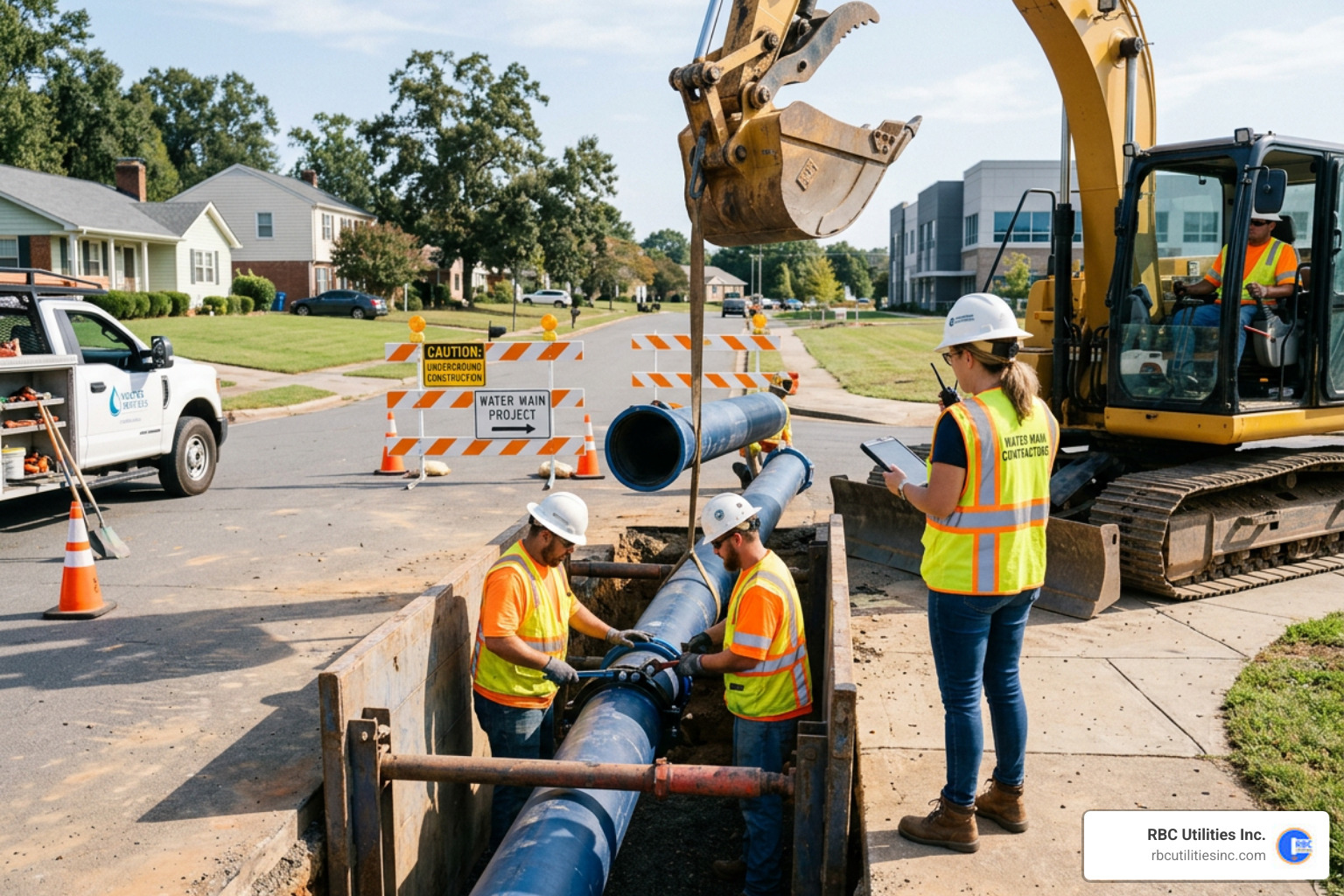
When we talk about the growth of the Carolinas, we often focus on the skyline of Charlotte or the bustling tech hubs of Raleigh. However, the real foundation of this expansion happens several feet underground. Water main contractors carolinas municipalities and developers hire are responsible for the "circulatory system" of our cities. Without high-quality water mains, there is no fire protection for new warehouses, no potable water for high-rise apartments, and no reliable service for the thousands of families moving to the region every month.
The urban expansion in North and South Carolina is relentless. From the coastal developments in Wilmington to the upstate growth near Greenville and Spartanburg, the demand for water transmission is at an all-time high. System reliability is not just a convenience; it is a matter of public health.
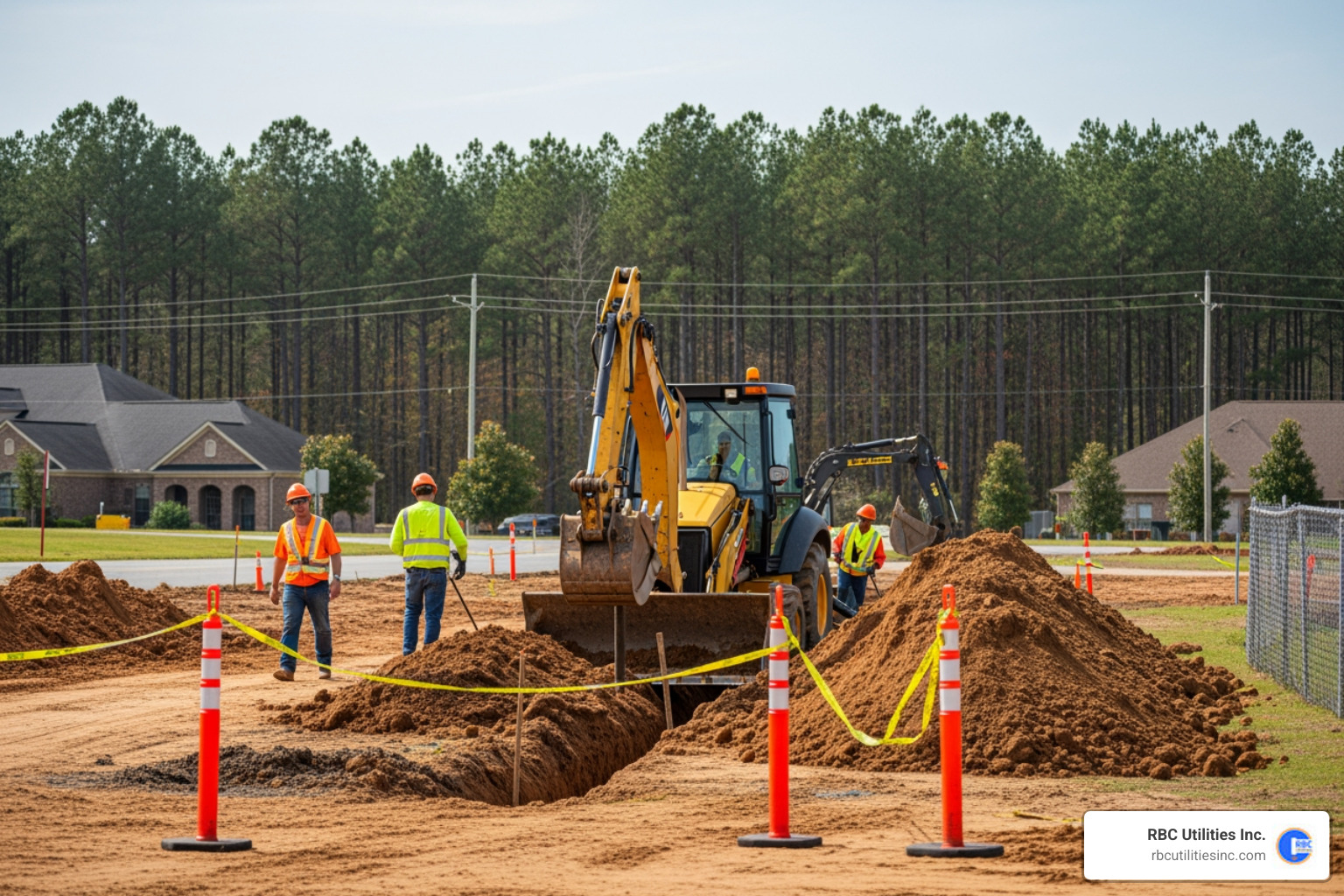
When we install water mains, we aren't just laying pipe; we are ensuring that fire protection lines have the necessary pressure to save lives and that water transmission remains uninterrupted during peak demand. This requires a deep understanding of regional soil types—ranging from the red clay of the Piedmont to the sandy soils of the Lowcountry—and the ability to navigate existing utility "spaghetti" in aging urban centers.
Modern utility work has evolved far beyond simply digging a ditch and dropping in a pipe. Leading water main contractors carolinas use advanced techniques to minimize surface disruption and overcome geographical hurdles.
In wet utilities, versatility is key. A top-tier contractor doesn't just stop at water lines; we integrate sanitary sewer systems, storm drainage, and pump stations into a cohesive infrastructure package.
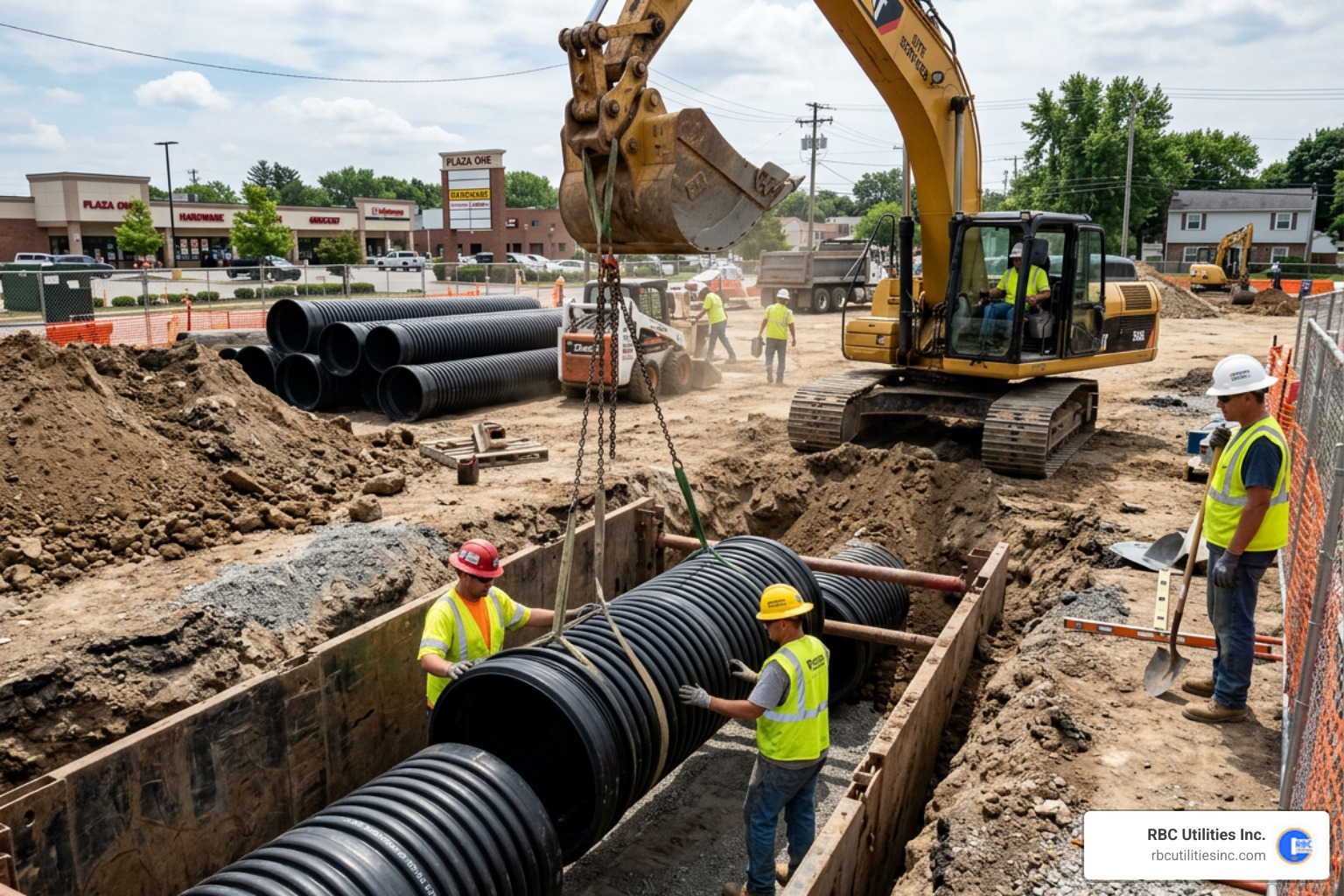
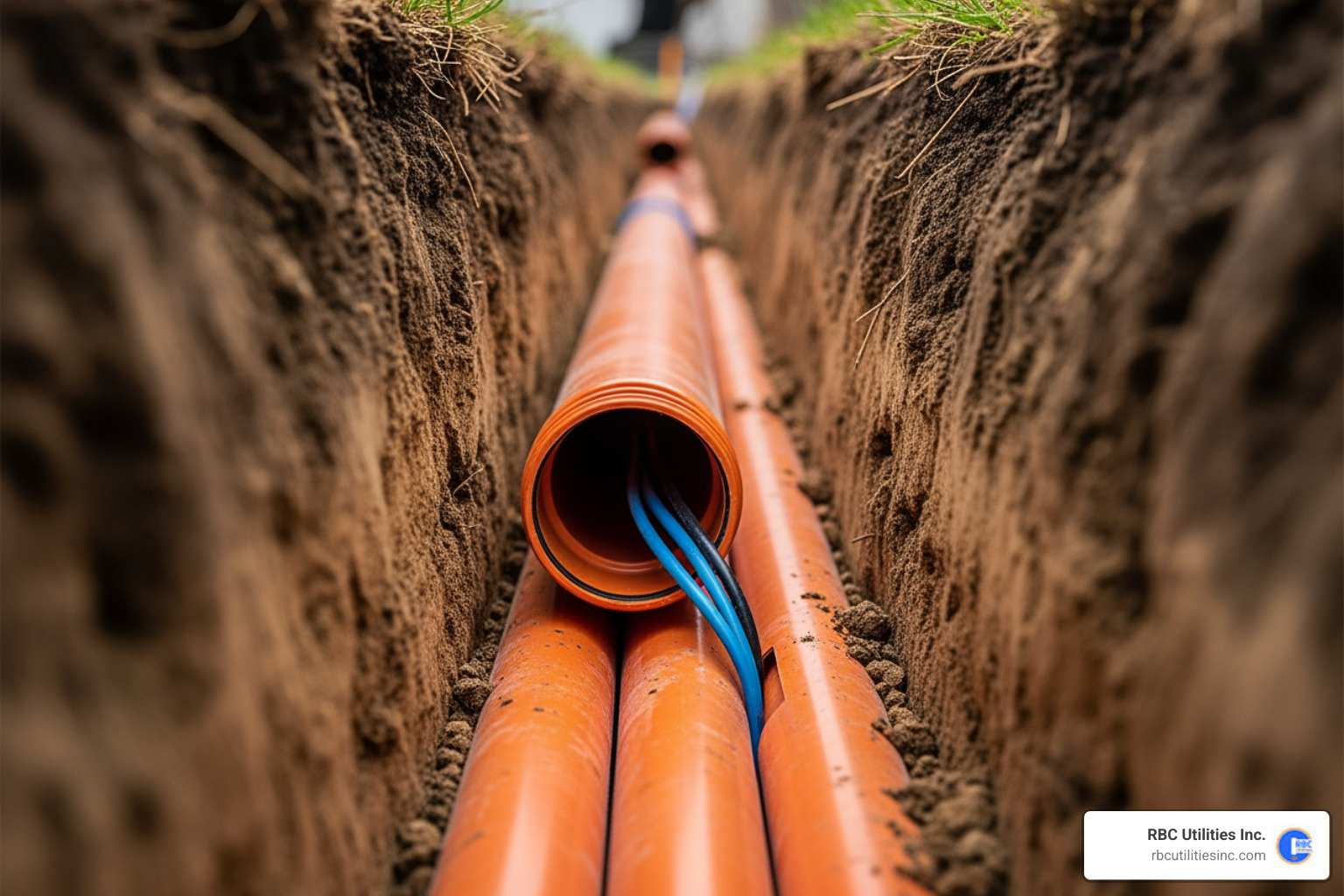
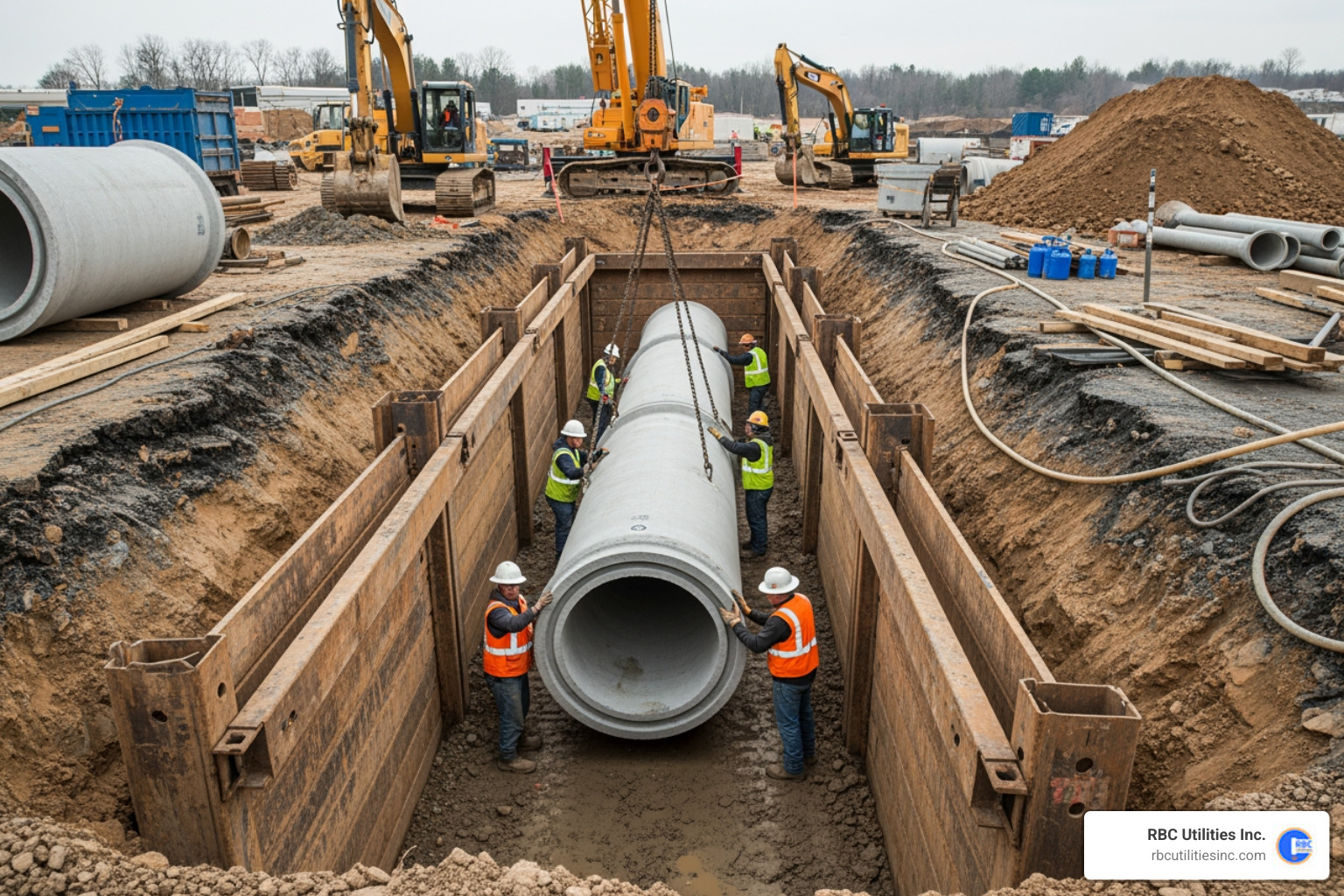
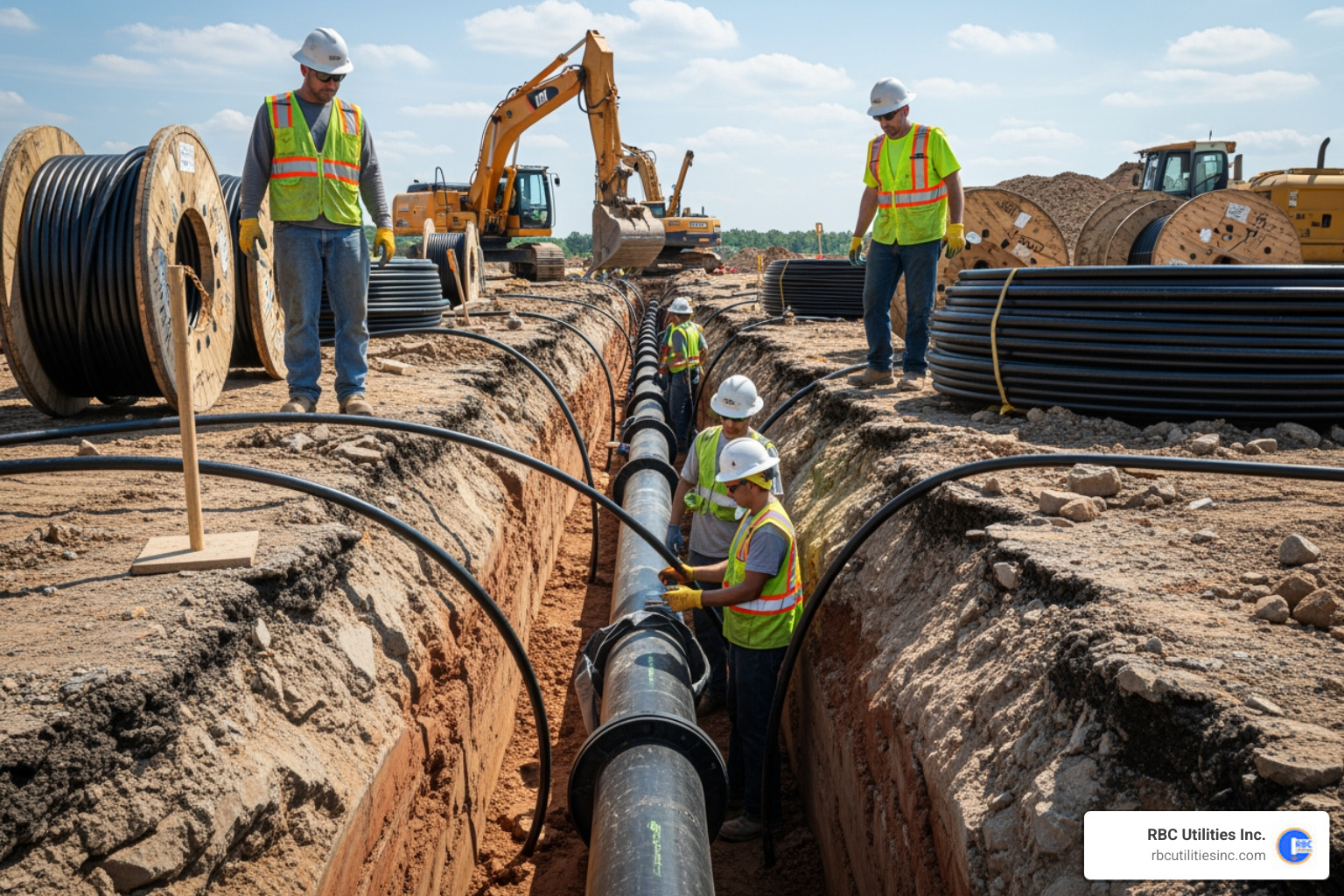
Not all pipes are created equal. While residential service lines might be small, major municipal projects often require large-diameter transmission mains—sometimes using 64-inch ductile iron pipe, which is the largest diameter currently in production.
We work with a variety of materials depending on the project needs:
In areas where gravity won't do the work for us, we install force mains. These are pressurized sewer pipes that use pumps or compressors to move wastewater from lower to higher elevations, overcoming the rolling hills of the Carolinas.
When a project moves from a simple pipe replacement to a massive site development, the stakes rise. We look for partners who offer comprehensive services, including:
Choosing a contractor based solely on the lowest bid is a risky game in utility construction. The "hidden" costs of poor safety or lack of proper licensing can be astronomical.
In North and South Carolina, a "Group 5" unlimited contractor license is the gold standard. This allows a company to take on projects of any size without financial limit. But the paperwork doesn't stop there. Look for teams that include:
Innovation is what separates the leaders from the followers. We utilize Trimble GPS and machine control on our equipment to achieve incredible accuracy in mass grading and trenching. This technology ensures that every foot of pipe is laid exactly to the engineered grade, which is critical for gravity-fed systems.
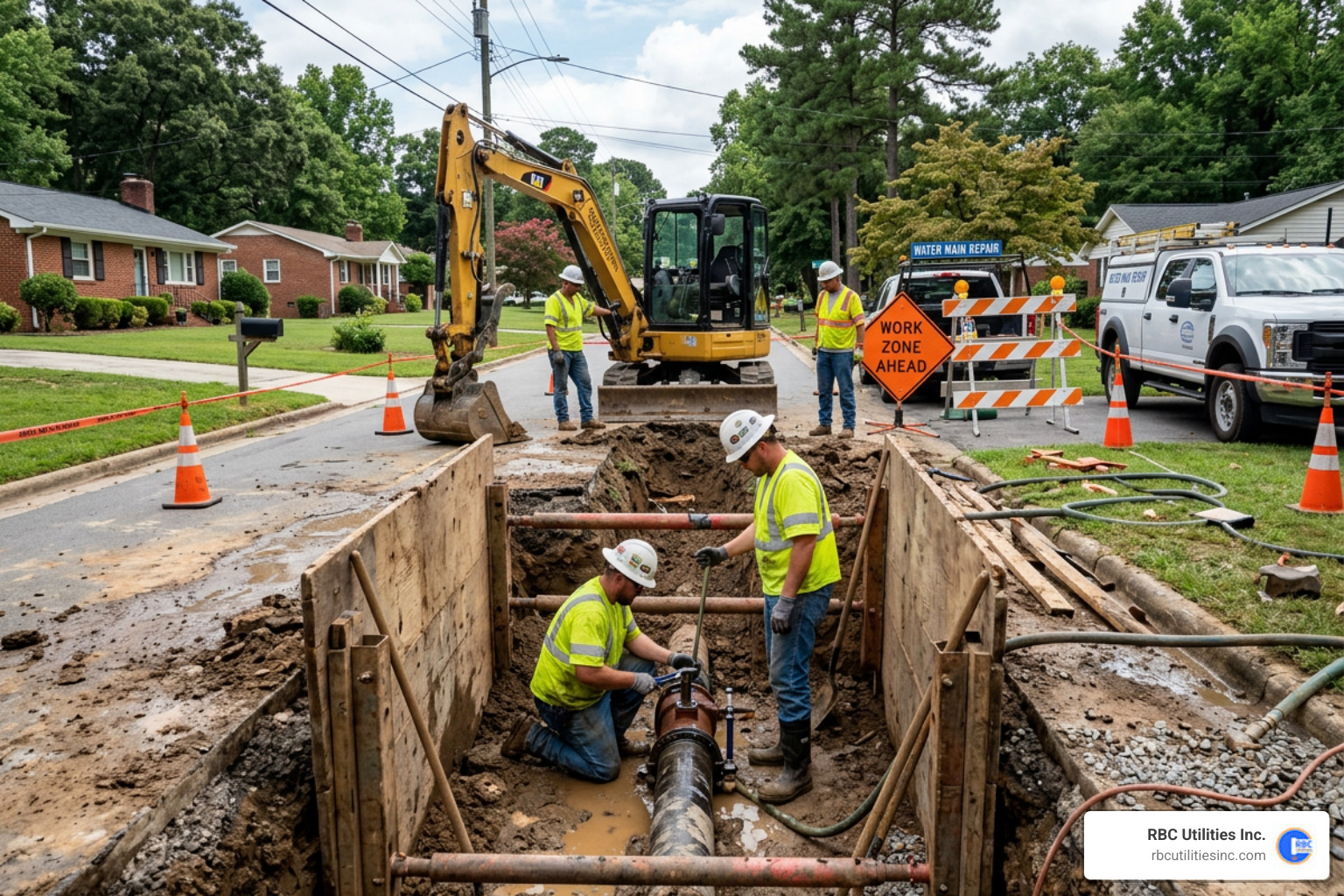
Furthermore, a safety-first culture isn't just a slogan; it's a commitment to ensuring every crew member goes home at night. This includes strict adherence to OSHA safety standards, regular safety training, and the use of up-to-date trench shoring and protection equipment.
The scope of work for water main contractors carolinas is vast. We aren't just working in the mud; we are building the backbone of the community.
Municipalities often require large-scale upgrades to aging infrastructure. This includes:
For developers, the goal is speed and reliability. We handle everything from land clearing and erosion control to the installation of complex stormwater storage systems, such as StormTech chambers. These underground systems can store tens of thousands of cubic feet of water, allowing developers to maximize their buildable land while meeting strict environmental regulations.
From Harrington subdivisions with 13,000+ feet of waterline to industrial sites like Michelin North America requiring specialized processed sewer lines, the scale of these projects proves why experience matters.
A qualified contractor should hold a General Contractor license with a "Water and Sewer" classification. In South Carolina, look for a "Group 5" unlimited license. In North Carolina, the "Unlimited" tier is similarly required for large-scale municipal or commercial projects. They should also be bonded and carry significant general liability and workers' compensation insurance.
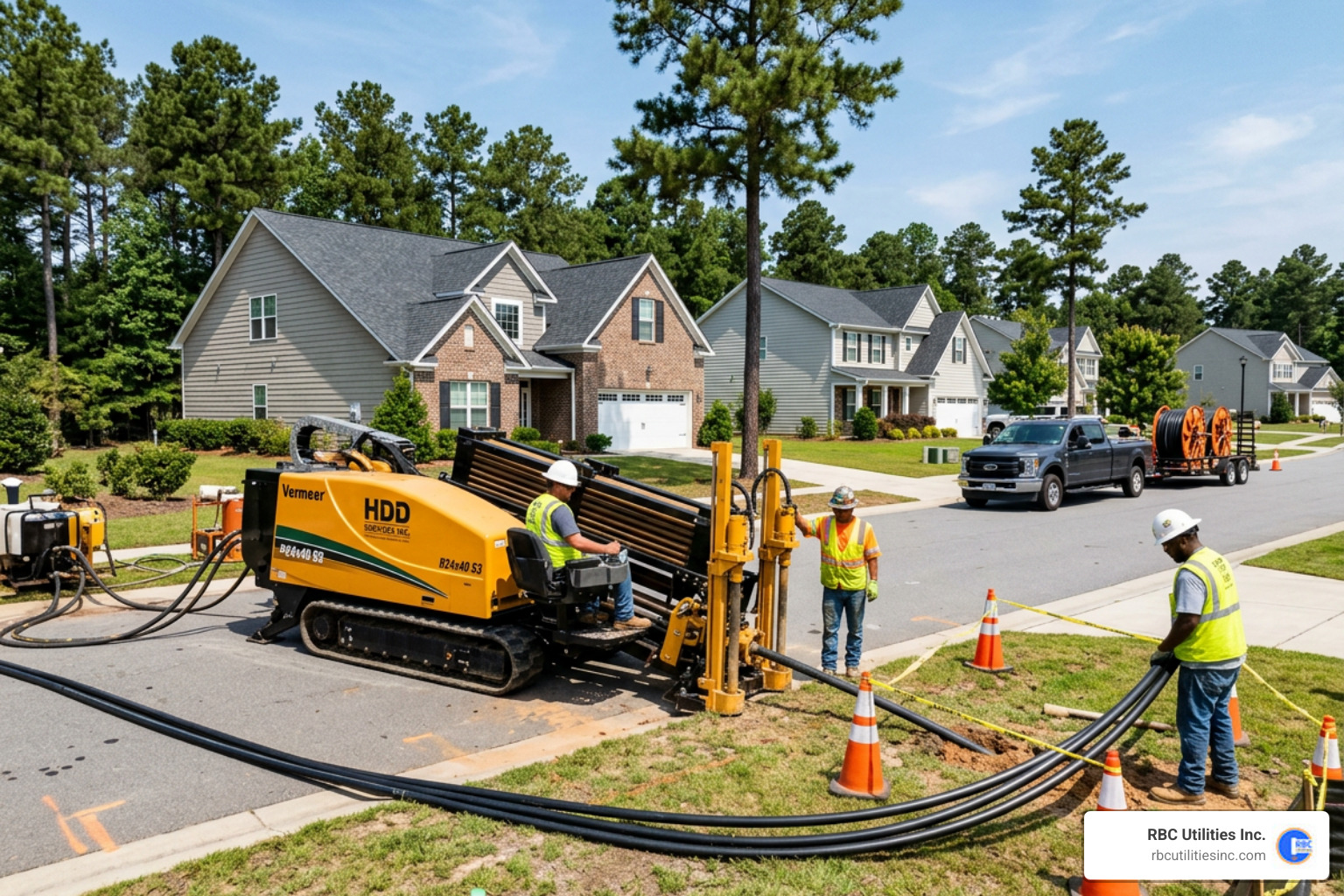
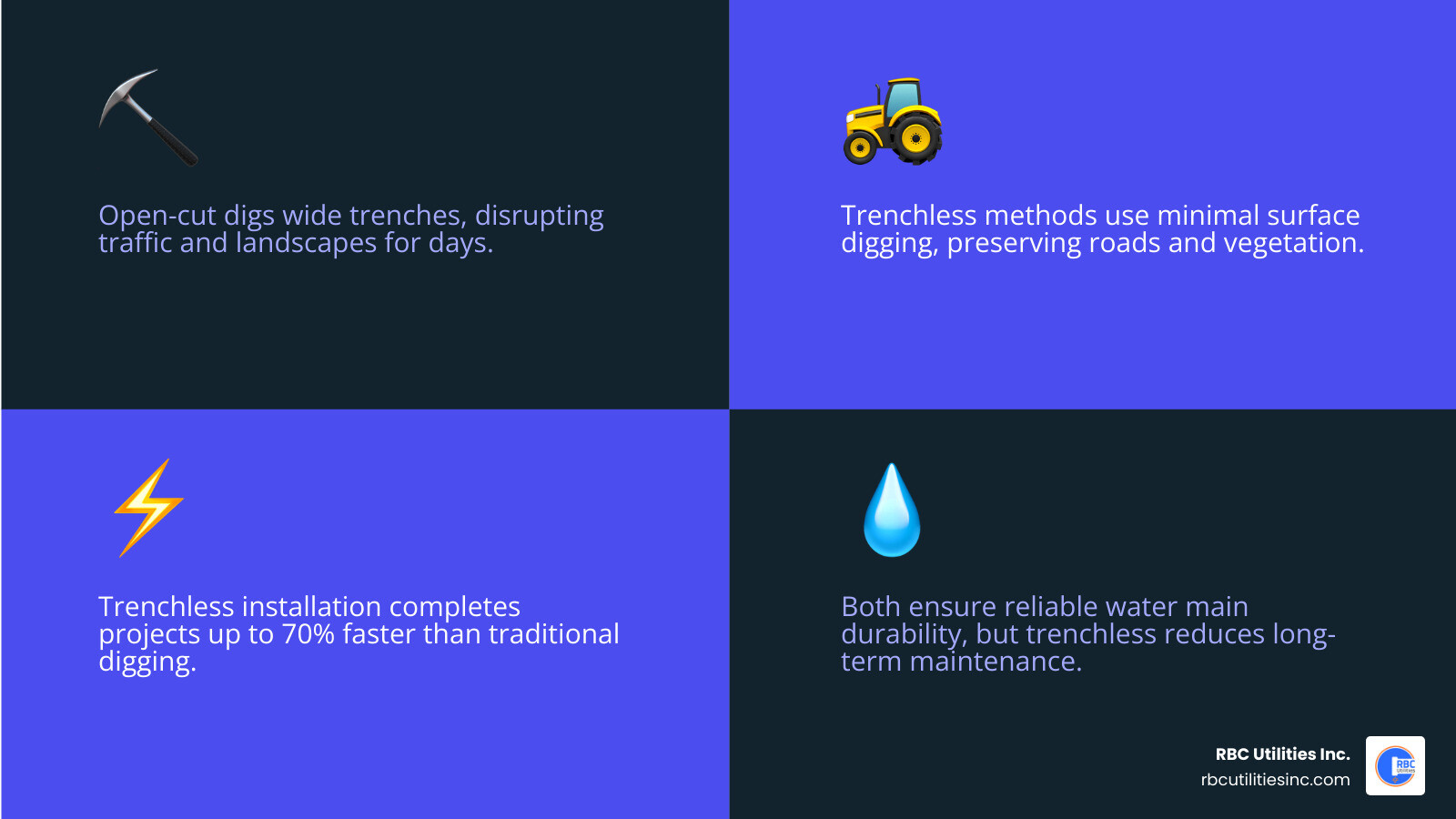
Trenchless technology, such as horizontal directional drilling or jack and bore, is a lifesaver for municipalities. It allows for the installation of new water lines under major intersections, railroads, or protected wetlands without tearing up the pavement. This saves thousands of dollars in road restoration costs and prevents the public outcry associated with major traffic detours.
A water main is a pipe that carries potable (drinking) water under pressure to homes and businesses. A force main is a pressurized sewer pipe. While most sewers use gravity to move waste downhill, a force main uses pumps to "force" wastewater uphill or across long distances where a natural slope isn't available.
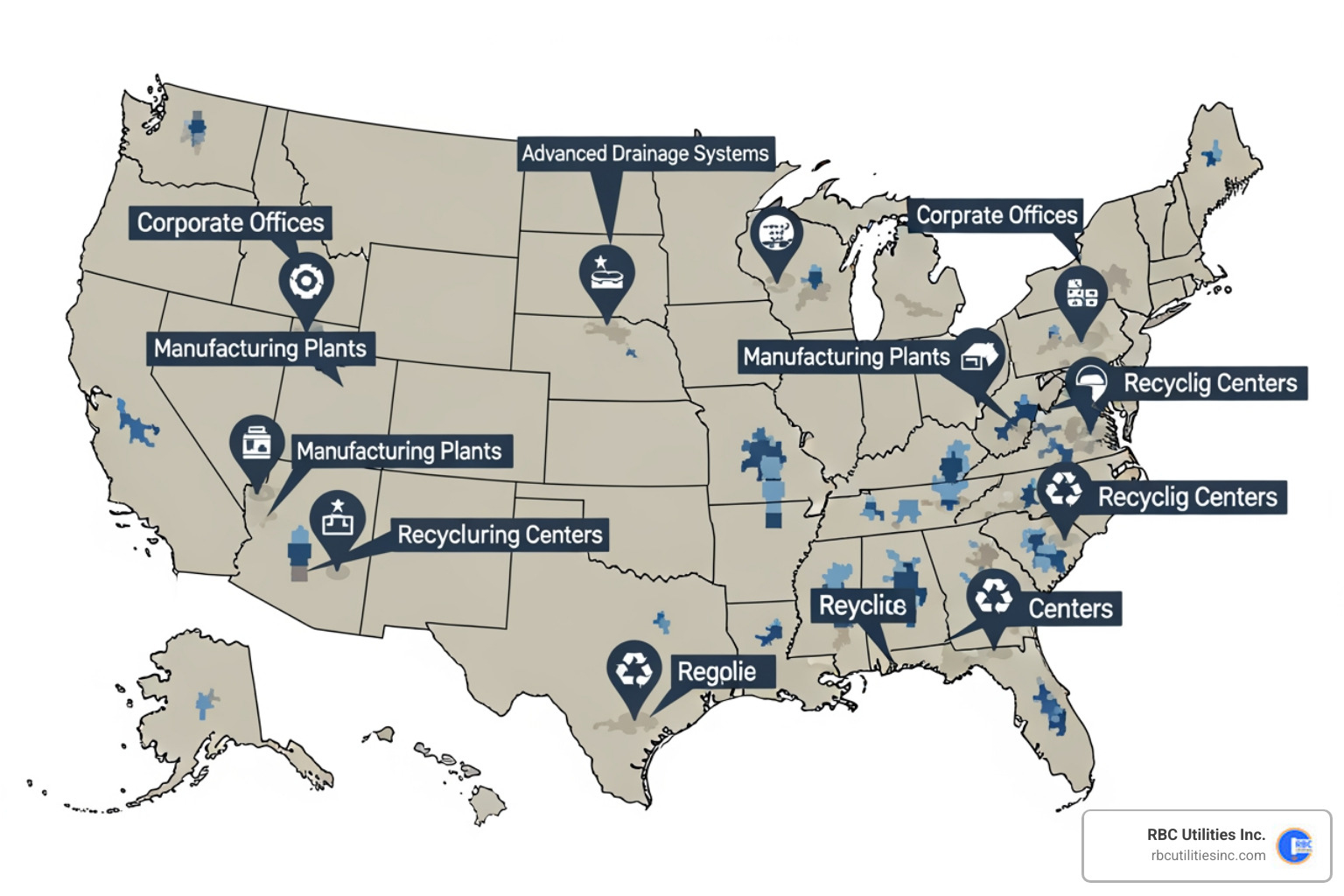
At RBC Utilities Inc., we understand that underground utilities are the most critical part of any construction project. We combine our deep local Carolinas expertise with the national resources of Saga Infrastructure to deliver results that are safe, reliable, and built to last. Whether you are a municipality upgrading a treatment plant or a developer breaking ground on a new subdivision in Charlotte, we have the specialized equipment and the "safety-first" culture to get the job done right.
Reliability isn't just about the pipes we put in the ground; it's about the partnerships we build on the surface.
Part of Saga Infrastructure, protecting what others built and helping it grow.
Address: 4404 Stuart Andrews Blvd., Suite K, Charlotte, NC 28217
Email: info@rbcutilitiesinc.com
Phone: 803-913-9727
Service Area: North Carolina | South Carolina