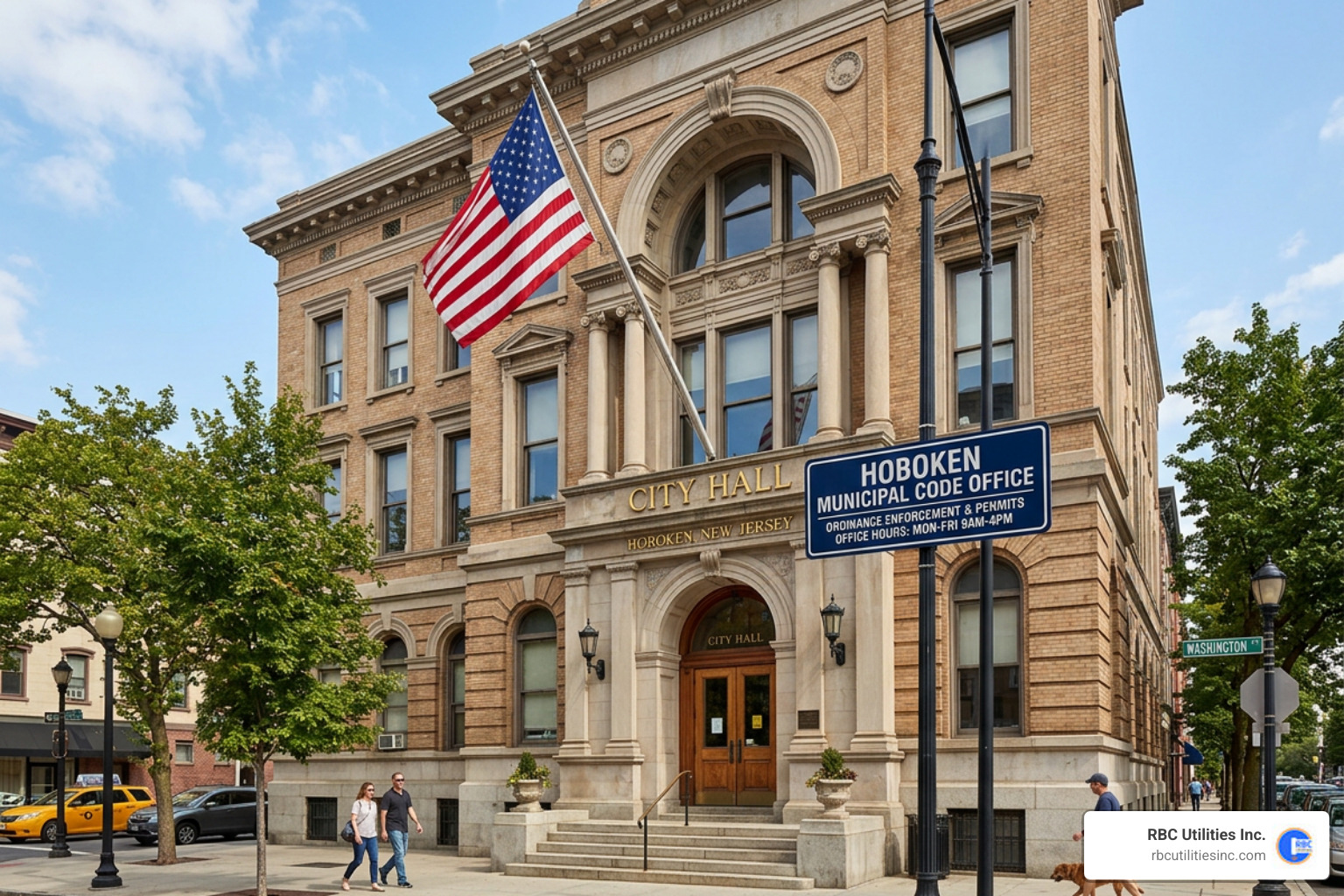
Municipal ordinances cover a wide range of local laws that affect residents, business owners, and contractors. For RBC Utilities Inc. in Charlotte, across North Carolina, South Carolina, and throughout the Carolinas, local code compliance is a core part of safe underground infrastructure work. This guide focuses on the types of municipal regulations contractors and property owners commonly encounter in the Carolinas and beyond, and why they matter for infrastructure planning. Cities like Hoboken, NJ are sometimes referenced as examples of detailed local governance, but the principles apply everywhere, including right here in the Charlotte metro area.
Key areas commonly covered by municipal codes:
Municipal codes are typically organized into major categories such as administrative rules, general legislation, and public health requirements. They are updated regularly, which is why contractors and property owners should always verify current local requirements before starting work.
Whether you are a resident trying to avoid a fine, a landlord reviewing local housing rules, or a contractor planning permitted work, knowing these rules matters. For utility and site work in the Carolinas, the same principle applies: understanding local construction hours, permitting processes, utility clearances, and waste disposal rules helps projects stay safe and compliant.
This guide breaks down the kinds of local ordinances that commonly affect construction and property use in plain language so you know what to look for before work begins.
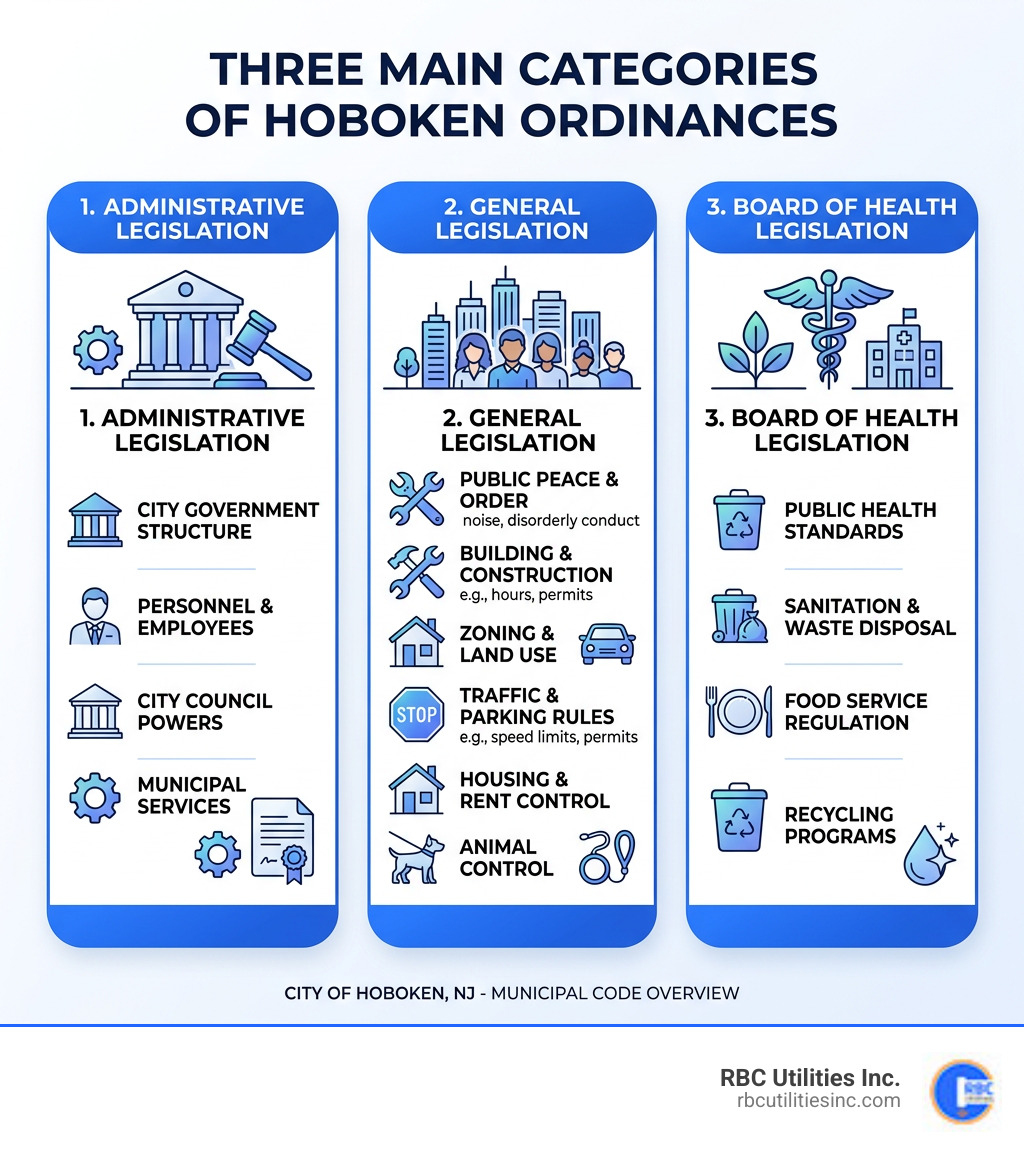
Navigating a city's legal code can feel like trying to read a map in a foreign language. However, most municipal codes are more organized than they first appear, whether you are reviewing ordinances in Charlotte, NC, or checking requirements in another city. Many municipalities use digital code libraries that separate laws into broad categories so residents, contractors, and property owners can find the rules that apply to them.
Municipal codes are often divided into three primary categories:
You might notice that some chapters in a municipal code are marked as "Reserved." This is not a mistake; it usually means the city has set aside those numbers for future laws or has removed an older law and has not replaced it yet. Keeping a code updated is a constant process as municipalities revise rules to address new public safety, development, and environmental concerns.
To put it simply, Administrative Legislation is about the inner workings of city government. It may establish the Department of Public Works, outline land use procedures, and set rules for budgeting, procurement, and ethics. If you are looking for how a city manages internal operations, this is usually where you start.
General Legislation is about actions within the city. If you want to know whether you can build an addition, when construction can begin, where you can park, or what type of permit a utility contractor needs for street work, those answers are usually found here. For contractors in Charlotte and across the Carolinas, this is often the most important section when planning underground utility installations and related site work.
Living and working in developed communities means balancing construction needs with neighborhood peace and safety. Most cities, including those across the Carolinas, regulate noise, construction activity, and disruptive conduct through separate ordinance sections. The specific chapter numbers and limits vary by municipality, but the general structure is similar whether you are working in Charlotte, Raleigh, or a smaller town.
Noise ordinances are often more technical, dealing with sound levels, equipment, and time-of-day restrictions, while broader public order provisions address behavior that disturbs the community.
The rules for noise usually vary depending on who is making the sound and what type of work is involved. Here is a general example of how municipalities often structure permitted hours:
| Activity Type | Typical Weekday Hours | Typical Weekend/Holiday Hours |
|---|---|---|
| Construction/Demolition | Often limited to daytime hours | Frequently restricted or permit-only |
| Commercial Power Tools | Often limited to daytime hours | Sometimes allowed with later start times |
| Public Employee Maintenance | Usually allowed during daytime hours | Often allowed with modified schedules |
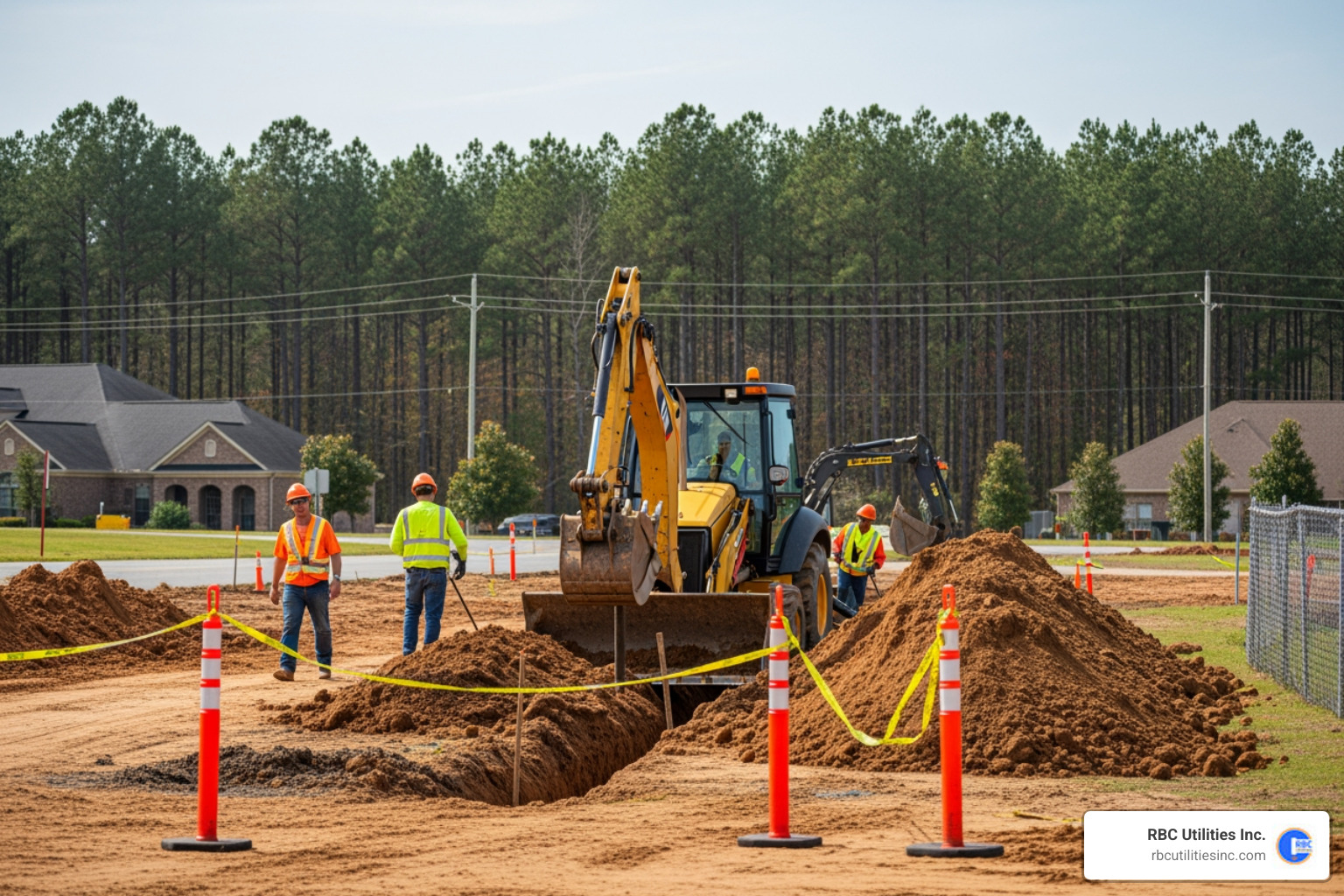
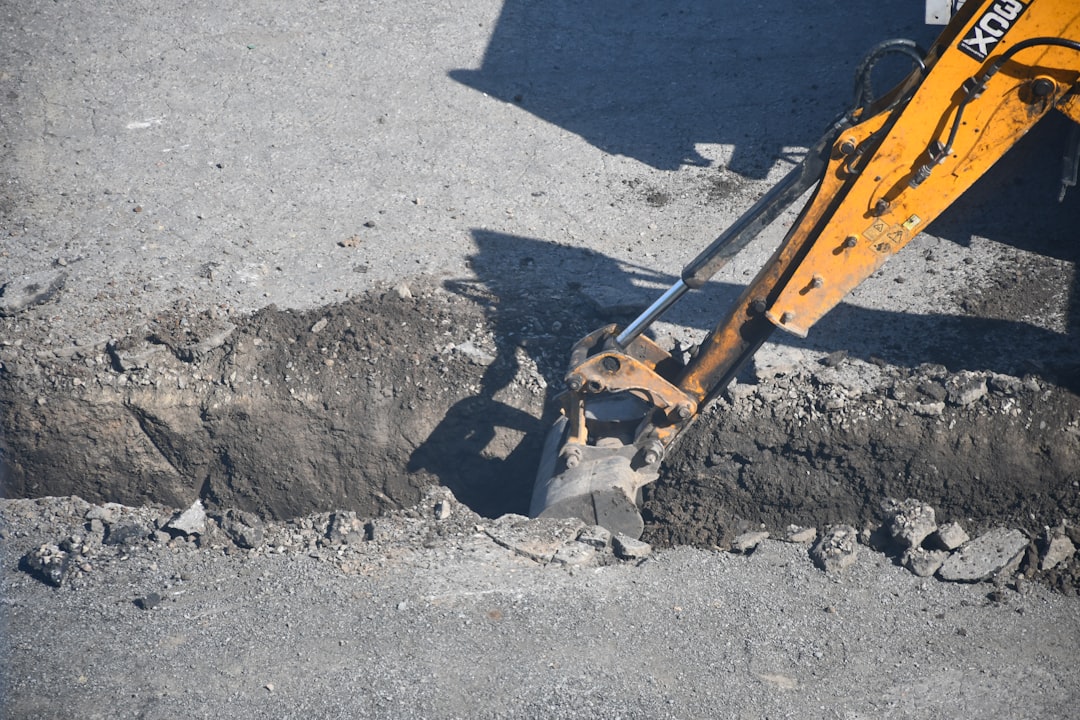
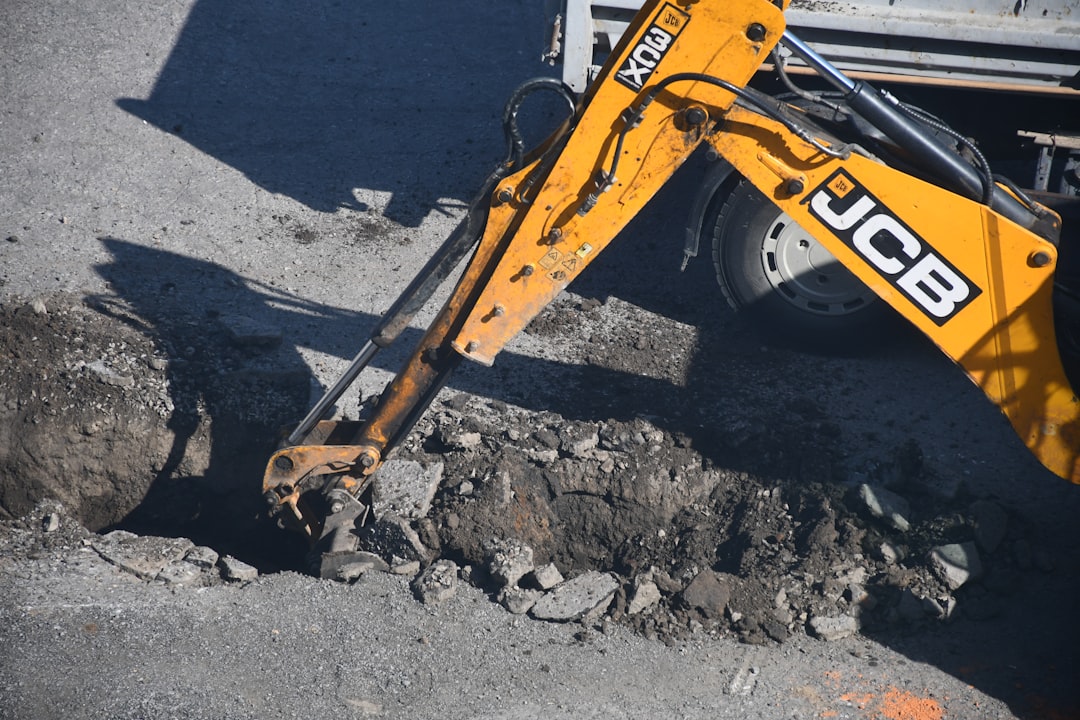
For contractors in Charlotte and across the Carolinas, these restrictions matter. If a project involves excavation, demolition, saw cutting, or heavy equipment, the local code may limit when that work can begin and whether it can occur on weekends. In many cities, exceptions are available for emergency work, utility repairs, or specially approved projects.
If someone violates local peace, noise, or public order ordinances, the city may issue more than a warning. Depending on the municipality, penalties can include:
These penalties can affect both the person causing the disturbance and, in some cases, the property owner or contractor responsible for the activity.
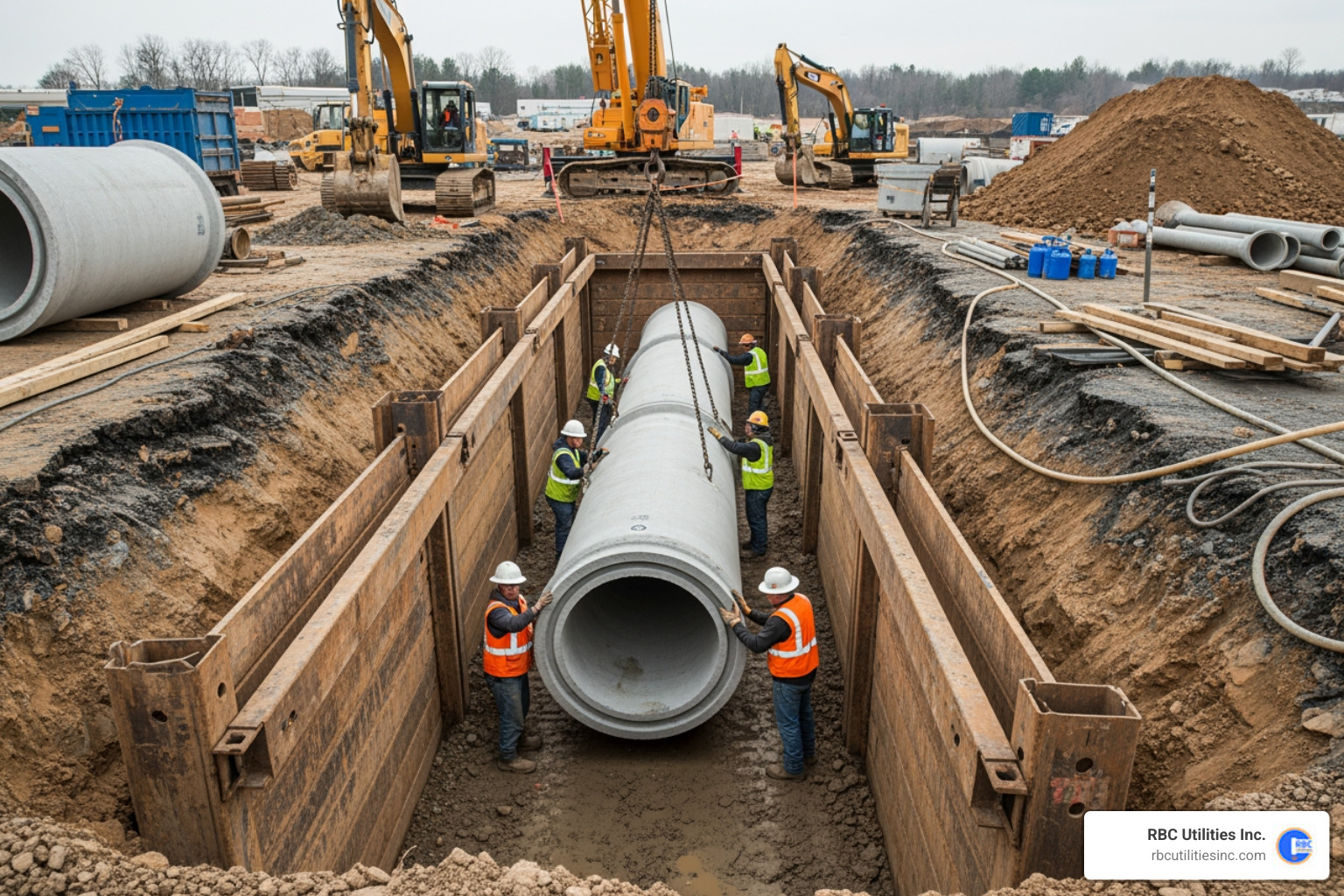
Municipal infrastructure work requires close attention to local permitting, safety, and public right-of-way rules. These requirements can be quite detailed regardless of the city, and the same principles apply in Charlotte, NC and across the Carolinas where RBC Utilities Inc. performs underground utility work.
For example, work that requires a street opening or sidewalk permit typically must follow the applicable local construction code and municipal permit requirements. One of the most common safety rules municipalities enforce involves fire hydrants. Many cities maintain a clearance requirement, often around 20 feet on either side of a fire hydrant, to protect emergency access. Obstructing a hydrant is a serious safety issue that can lead to fines or enforcement action.
As mentioned earlier, municipalities often limit construction and demolition to weekday daytime hours, though the exact schedule depends on local law. Some cities provide exceptions for emergency work, such as urgent utility repairs, or for projects that have received special permission through the appropriate local approval process. In some jurisdictions, contractors may need to submit a noise mitigation plan or similar documentation to show they are reducing impacts on nearby properties.
Keeping a city clean is a group effort. Municipalities commonly set rules for garbage, rubbish, and recycling. One frequently regulated waste stream is fluorescent lamps. Because these can contain mercury, they often cannot be placed in regular trash and may require special packaging, labeling, or disposal procedures under local or state rules.
The Improper Disposal of Waste Ordinance is one example of how a city may outline prohibited disposal practices. Littering, improper composting, and failing to follow local recycling requirements can all lead to summonses or enforcement by health or sanitation departments. Carolinas municipalities have similar waste disposal rules that contractors should review before beginning any project.
Cities use ordinances to protect public spaces, neighborhood quality of life, and community safety. These local rules can cover everything from pet licensing to street trees to conduct in parks and sidewalks, in municipalities across the Carolinas and nationwide.
Dog Licensing: Many municipalities require dogs above a certain age to be licensed locally. These rules help support vaccination compliance, animal control, and park management.
Public Conduct: Cities commonly prohibit conduct such as public urination, indecent exposure, and possession of open containers of alcohol in public places unless specifically permitted. The exact wording and exceptions depend on local law.
Trees are more than just scenery in many communities; they are often part of stormwater management, heat reduction, and neighborhood planning. Some cities regulate planting, trimming, or removal of street trees through permits or local boards and commissions. Charlotte, for example, has its own tree ordinance that contractors and property owners should be aware of.
For contractors and property owners in the Carolinas, these are good reminders that even routine site or utility work can trigger local environmental and right-of-way requirements.
Housing, parking, and traffic ordinances are among the local rules people encounter most often. While these topics are not central to underground utility construction, they are part of the broader municipal code environment that property owners, developers, and contractors may need to navigate during a project.
Some cities adopt tenant protection measures, rent regulation rules, or special disclosure requirements for certain types of housing. Others focus more heavily on zoning, occupancy, and property maintenance standards. Because these rules vary widely by municipality, property owners and residents should review the applicable local code before making assumptions about what is allowed.
Parking and traffic rules can directly affect project logistics. Municipal codes often regulate residential permits, metered parking, loading zones, street closures, and temporary no-parking signs for construction activity.
Cities may also enforce local speed limits, truck routes, and work-zone traffic control requirements. For utility contractors, these rules matter because excavation, lane closures, and equipment staging often require coordination with local transportation and public works departments.
Ordinances are not static; they change over time. Municipalities may adopt temporary emergency measures, update parking programs, revise zoning requirements, or add new rules affecting development and public safety.
That is why contractors and property owners should verify current local ordinances, permit conditions, and temporary restrictions before starting work. For RBC Utilities Inc., staying current on municipal requirements in Charlotte and across the Carolinas is part of delivering safe, reliable underground utility projects.
If a contractor or neighbor appears to be violating local construction hour or noise rules, residents typically have several options depending on the municipality. They may contact the police non-emergency line, the local code enforcement office, the construction inspections department, or their city council representative. It is usually helpful to keep a log of dates, times, and the type of activity involved.
In many municipalities, it is illegal to consume alcohol or possess an open container on public streets, sidewalks, or in parks unless there is a specific permit or licensed area that allows it. Because the details vary by city, residents should check the applicable local ordinance for exceptions.
Local housing rules may address topics such as rent regulation, habitability standards, landlord disclosures, occupancy limits, and code compliance. If a tenant believes a landlord is violating local requirements, the best next step is usually to review the city code and contact the appropriate local housing, rent regulation, or code enforcement office.
Staying on the right side of municipal ordinances does not have to be a headache. Whether it is respecting local construction start times, keeping a dog licensed, or ensuring permitted work follows local fire hydrant clearance rules, these laws are designed to keep communities safe, orderly, and functional.
The types of municipal regulations discussed here - construction hour limits, utility clearance rules, permitting requirements, and waste disposal standards - are common across cities nationwide, including throughout the Carolinas. For contractors and property owners, understanding local code requirements is an important part of safe, reliable project planning. RBC Utilities Inc. applies that same compliance-focused mindset to underground utility infrastructure projects in Charlotte, North Carolina, South Carolina, and across the Carolinas.
If you are planning a project that involves underground utilities or simply want to learn more about infrastructure reliability in the Carolinas, we are here to help. Our team ensures that every project, from water lines to storm drains, is built to last and fully compliant with local municipal codes.
Part of Saga Infrastructure, protecting what others built and helping it grow.
Address: 4404 Stuart Andrews Blvd., Suite K, Charlotte, NC 28217
Email: info@rbcutilitiesinc.com
Phone: 803-913-9727
Service Area: North Carolina | South Carolina