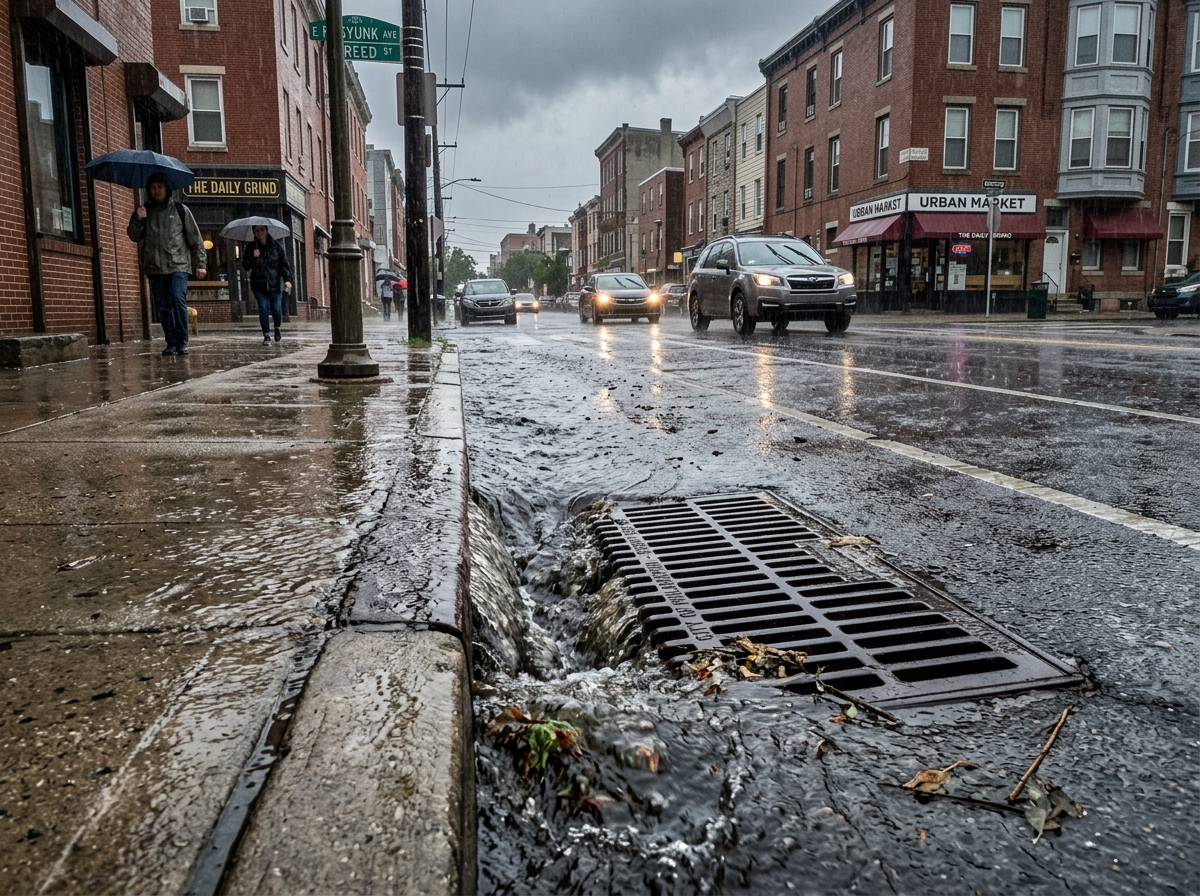
underground utility installation NC is one of the most critical — and least visible — parts of any residential or commercial development in the Carolinas.
Before a single building goes up, the pipes, conduits, and cables beneath the ground must be planned, permitted, and installed correctly. Get it wrong, and you face costly repairs, project delays, and potential safety hazards.
Here's a quick overview of what underground utility installation in NC typically involves:
| Category | Key Details |
|---|---|
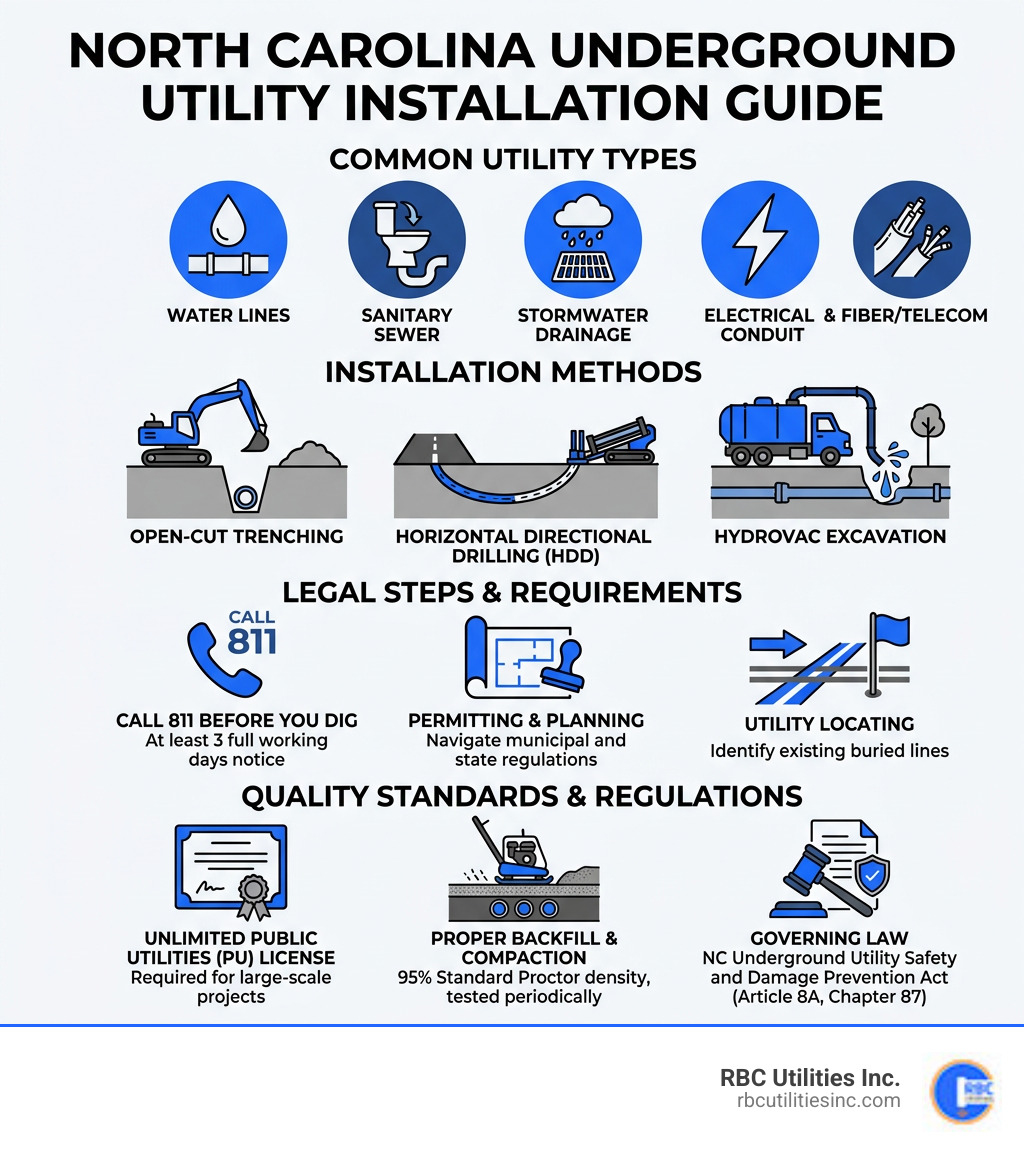
| Utility Types | Water lines, sanitary sewer, stormwater drainage, electrical conduit, fiber/telecom |
| Common Methods | Open-cut trenching, horizontal directional drilling (HDD), hydrovac excavation |
| Key Legal Requirement | Call 811 at least 3 full working days before any digging |
| Contractor Qualification | Look for an Unlimited Public Utilities (PU) license for large-scale projects |
| Backfill Standard | 95% Standard Proctor density, tested every 1,000 feet |
| Governing Law | NC Underground Utility Safety and Damage Prevention Act (Article 8A, Chapter 87) |
For developers and general contractors in the Carolinas, the stakes are high. A missed permit, an unmarked gas line, or improper compaction can derail a project and blow your budget.
This guide breaks down everything you need to know — from the types of utilities installed underground in NC, to the methods used, the regulations you must follow, and how to choose a contractor who can deliver on time and on budget.
When we talk about underground utility installation NC, we are describing the "nervous system" and "circulatory system" of our cities. Without these buried networks, our modern lives in Charlotte, Raleigh, or Greensboro would grind to a halt. In North Carolina, these systems are governed by strict municipal standards to ensure they last for decades.
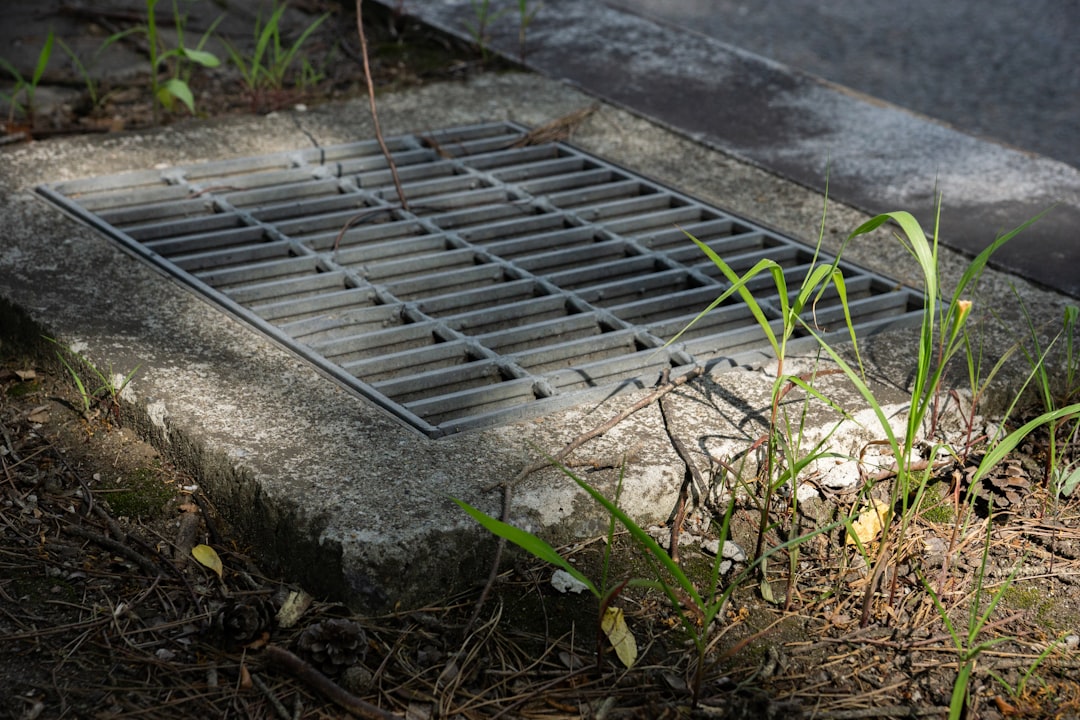
There are several distinct types of utilities we manage and install. Each has its own set of rules and material requirements:
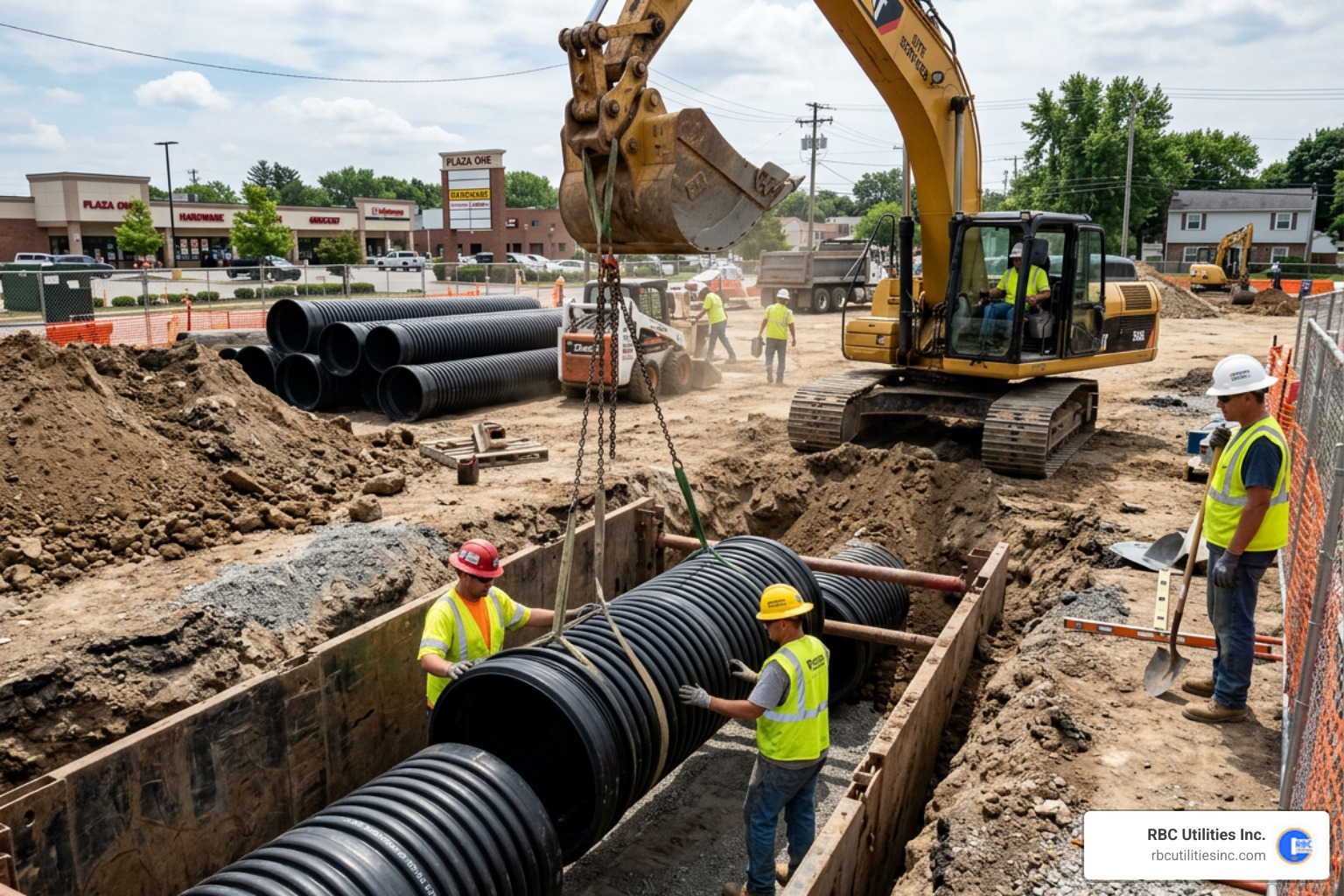
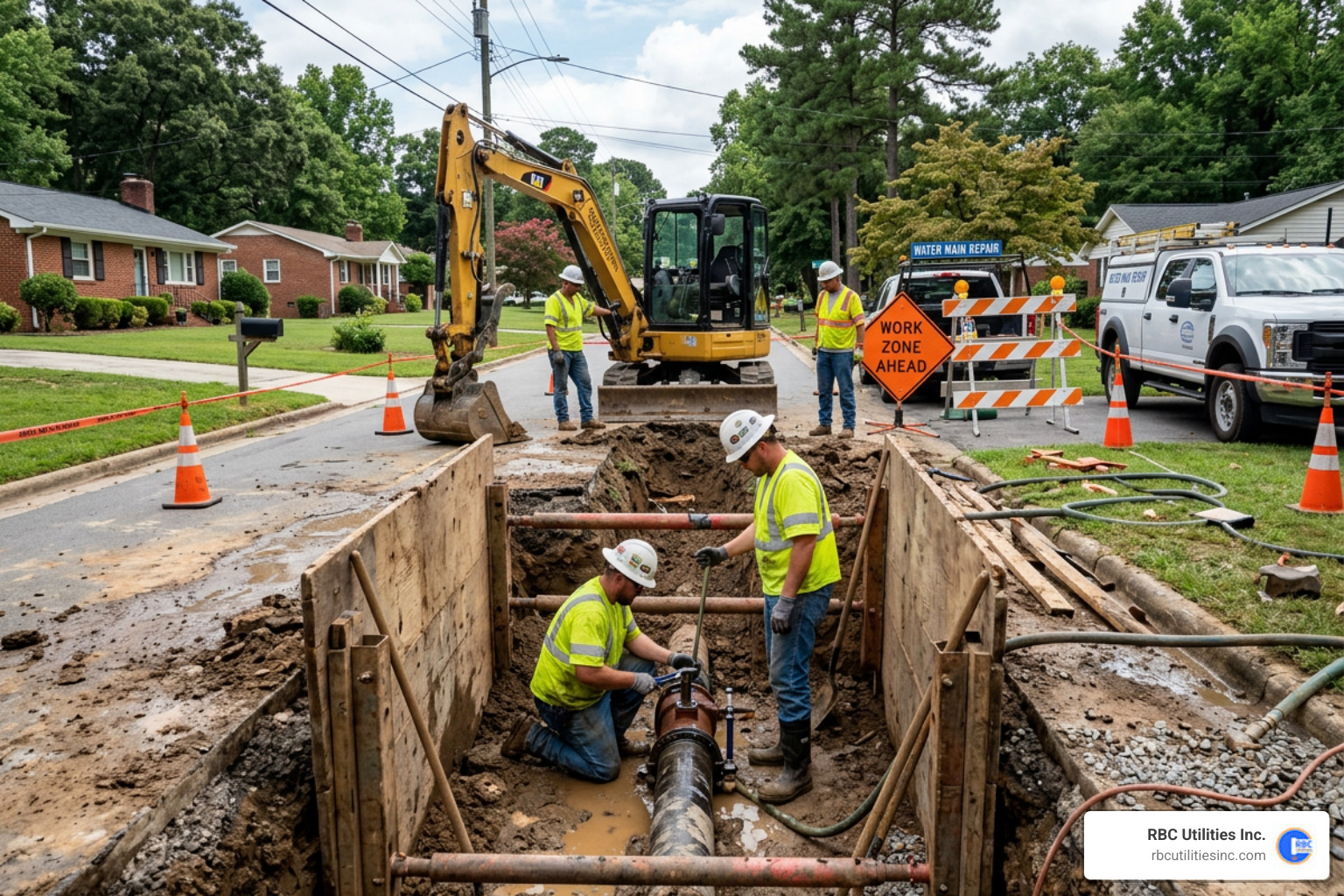
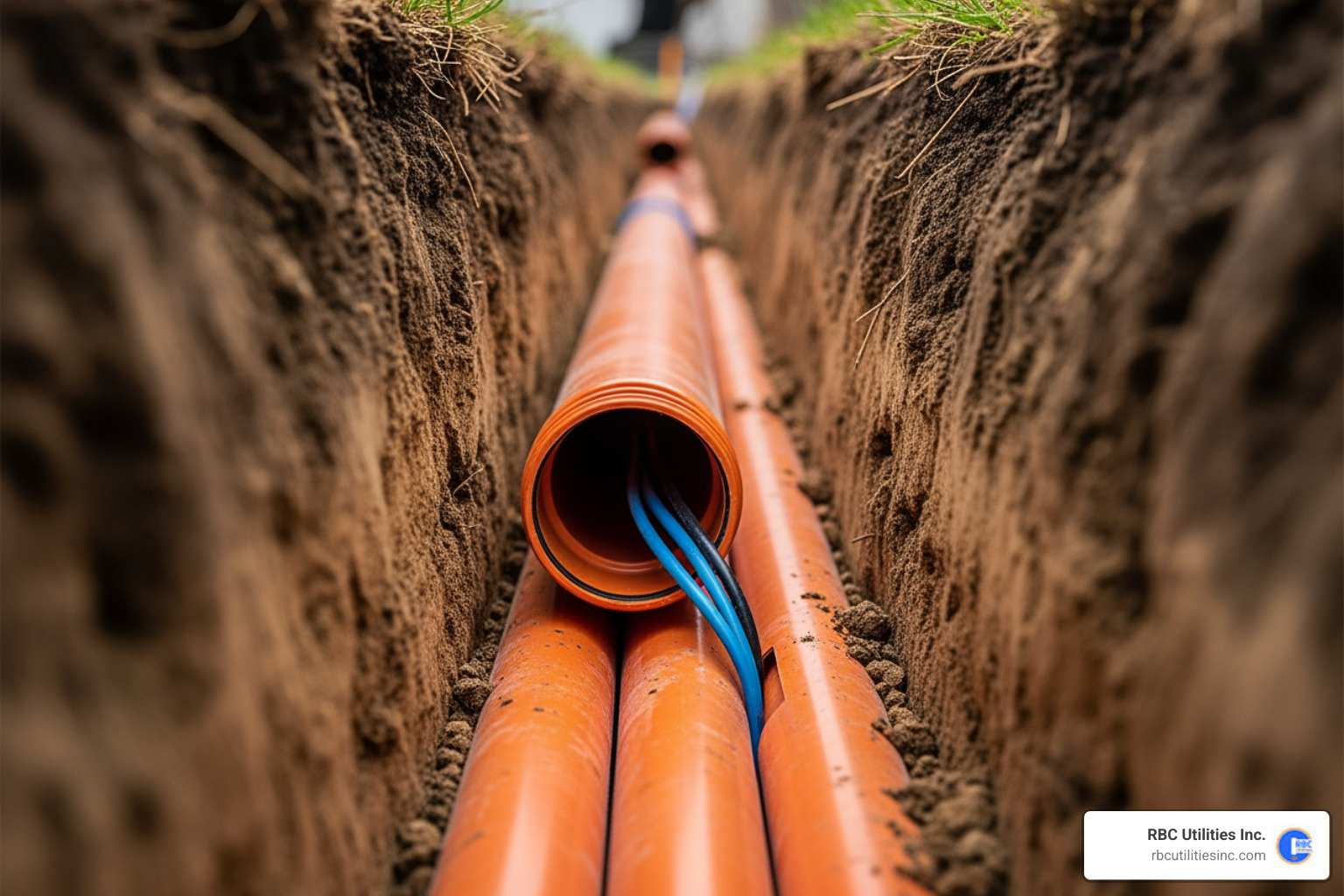
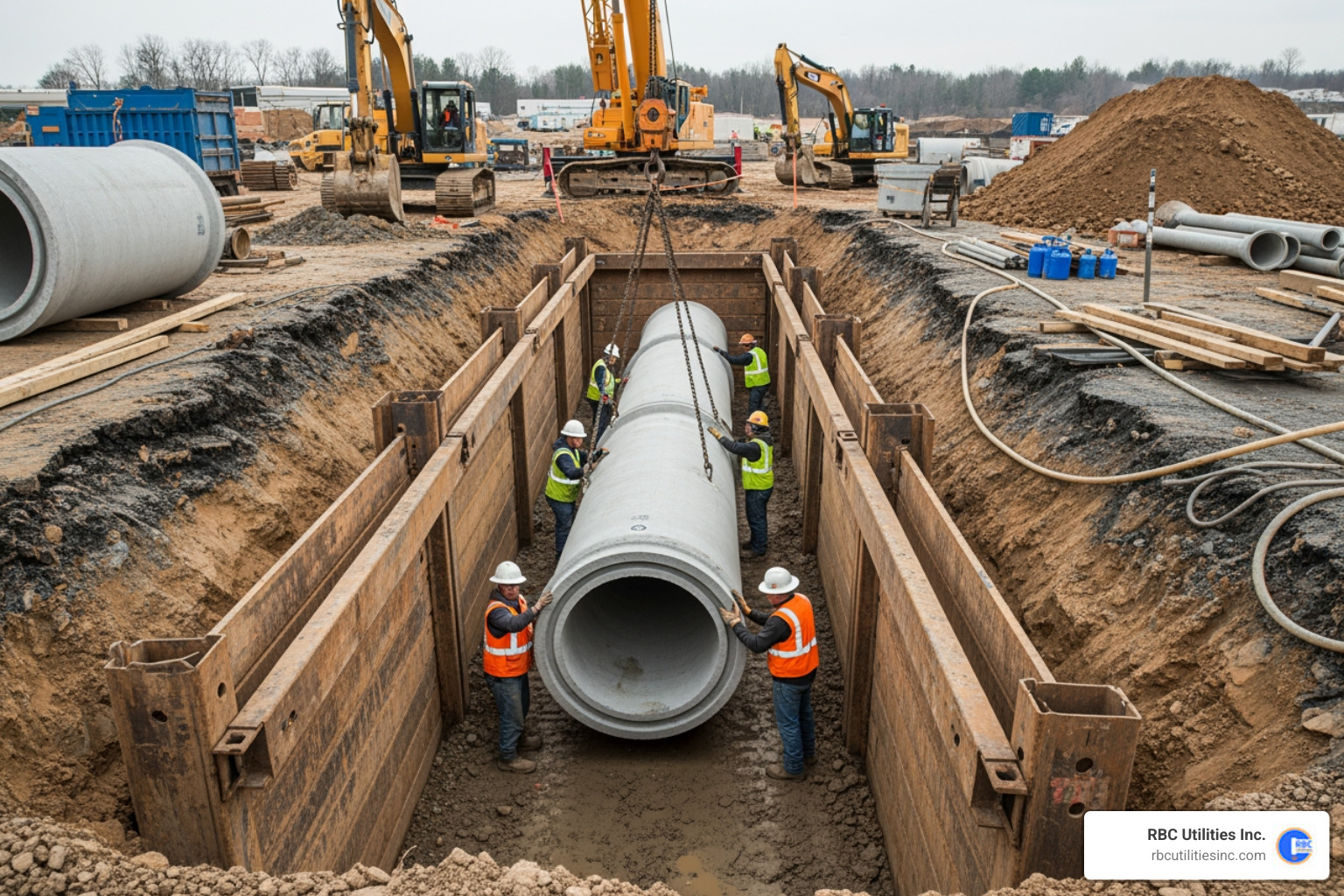
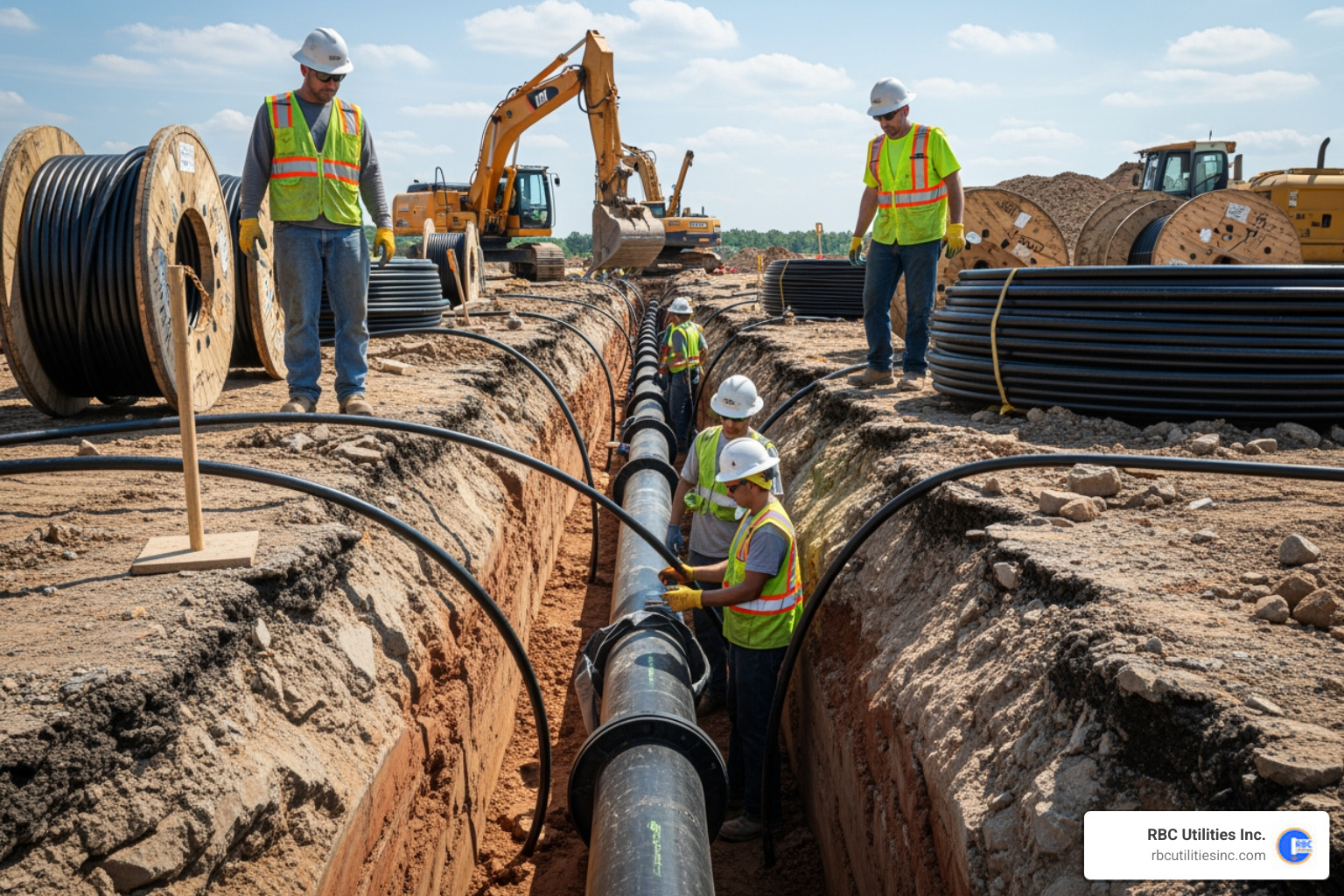
In many NC municipalities, we follow specific guidelines like Section 450 - Utility Trenches, which dictates everything from how wide a trench should be (usually at least 16 to 24 inches wider than the pipe) to what kind of stone we use for bedding.
We also occasionally deal with subaqueous facilities. These are utility lines that cross under bodies of water—like a creek or a lake. These require even more lead time for permitting and specialized installation techniques to protect our beautiful North Carolina waterways.
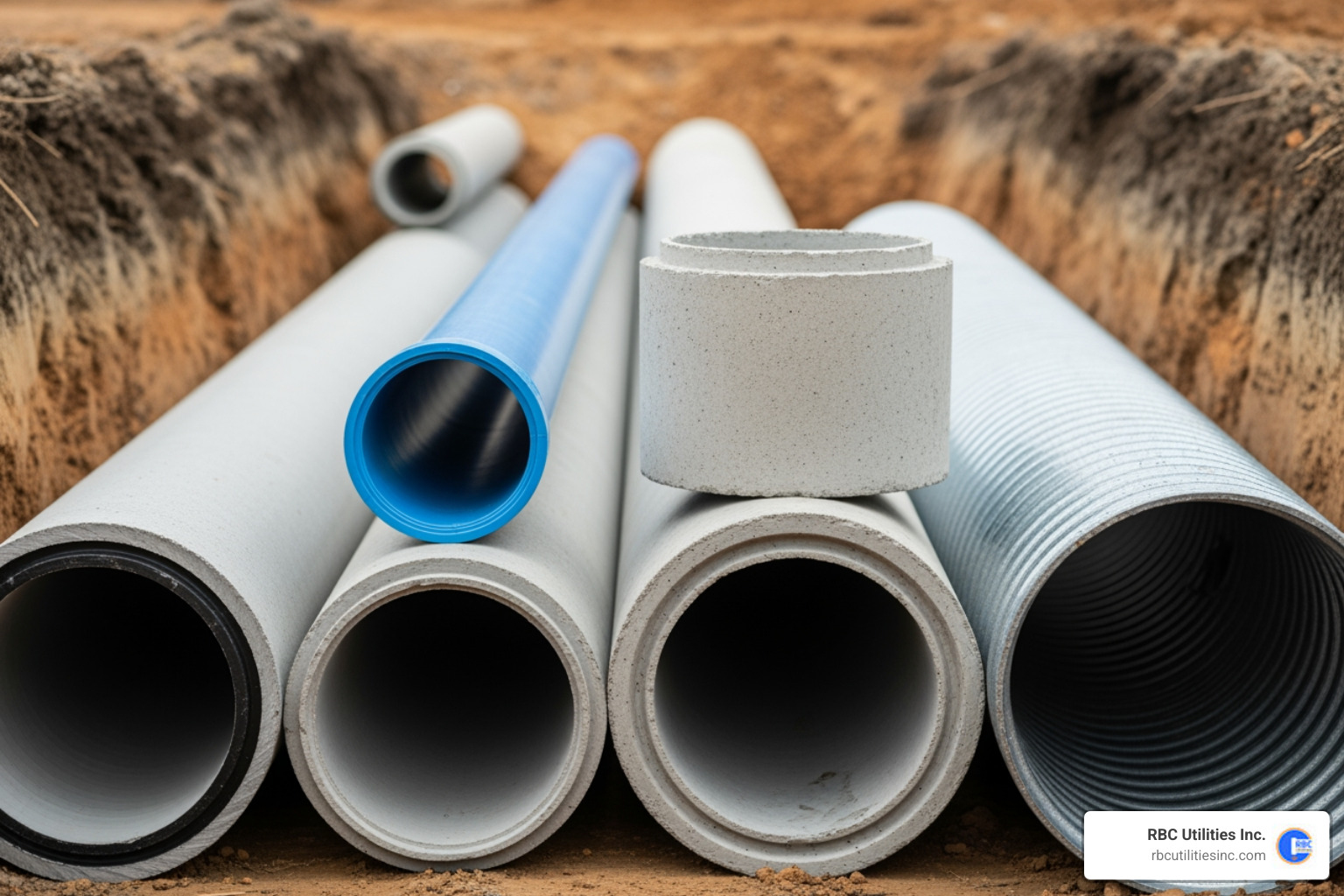
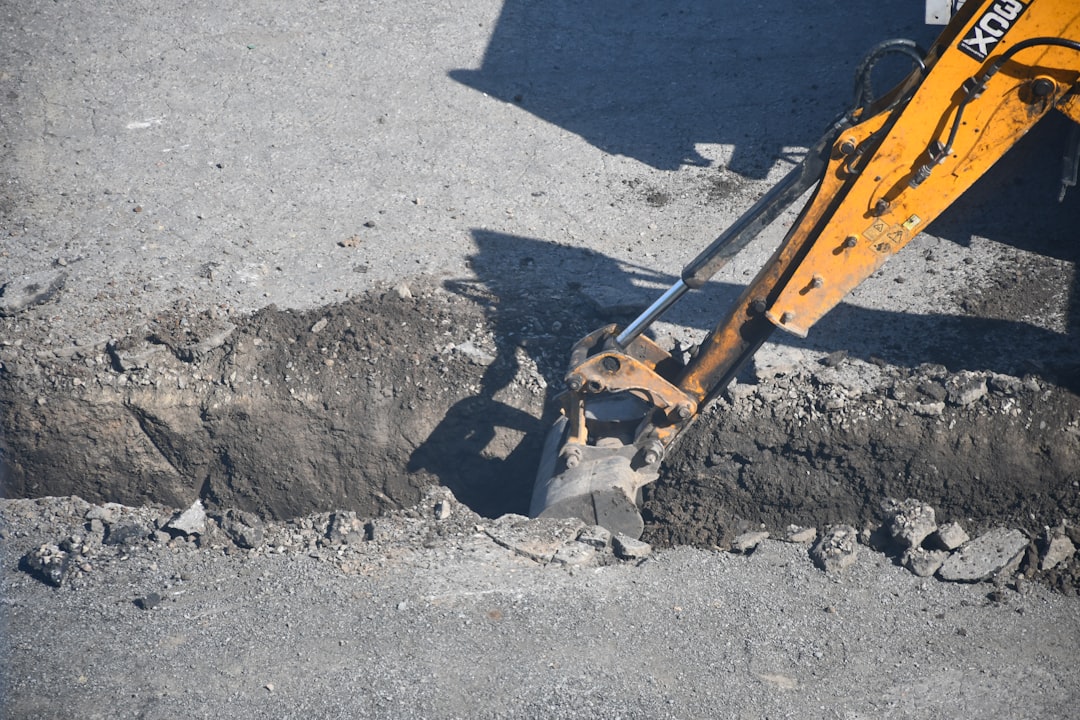
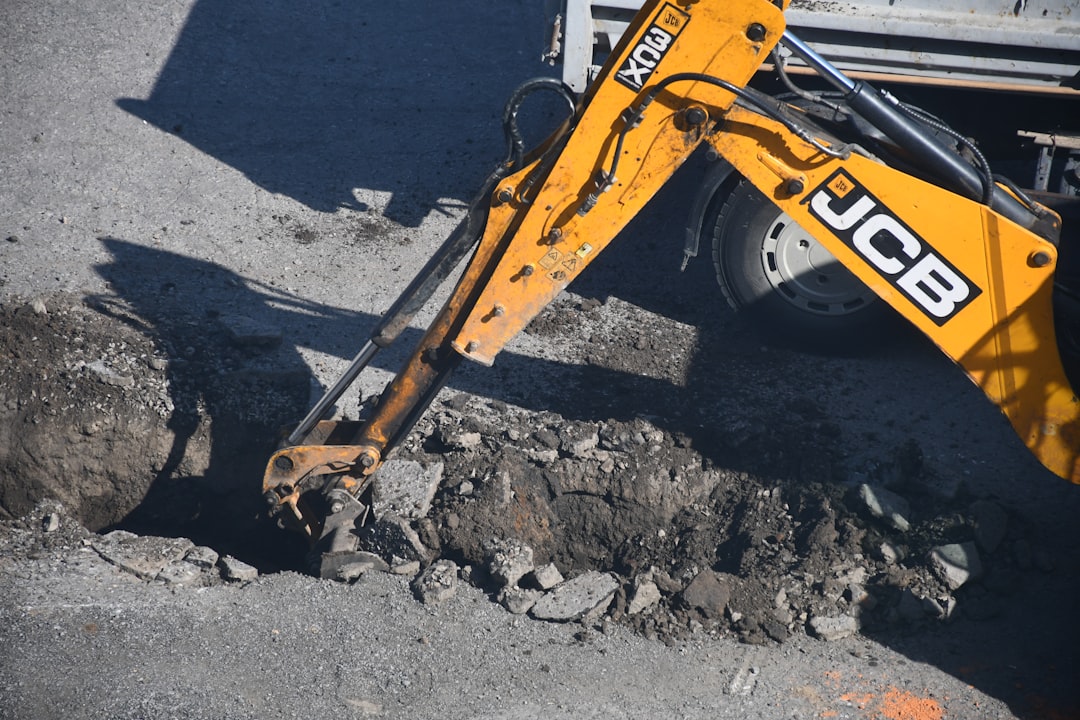
Choosing the right method for underground utility installation NC can be the difference between a project that finishes early and one that gets stuck in the mud (literally). We utilize several advanced technologies to ensure precision.
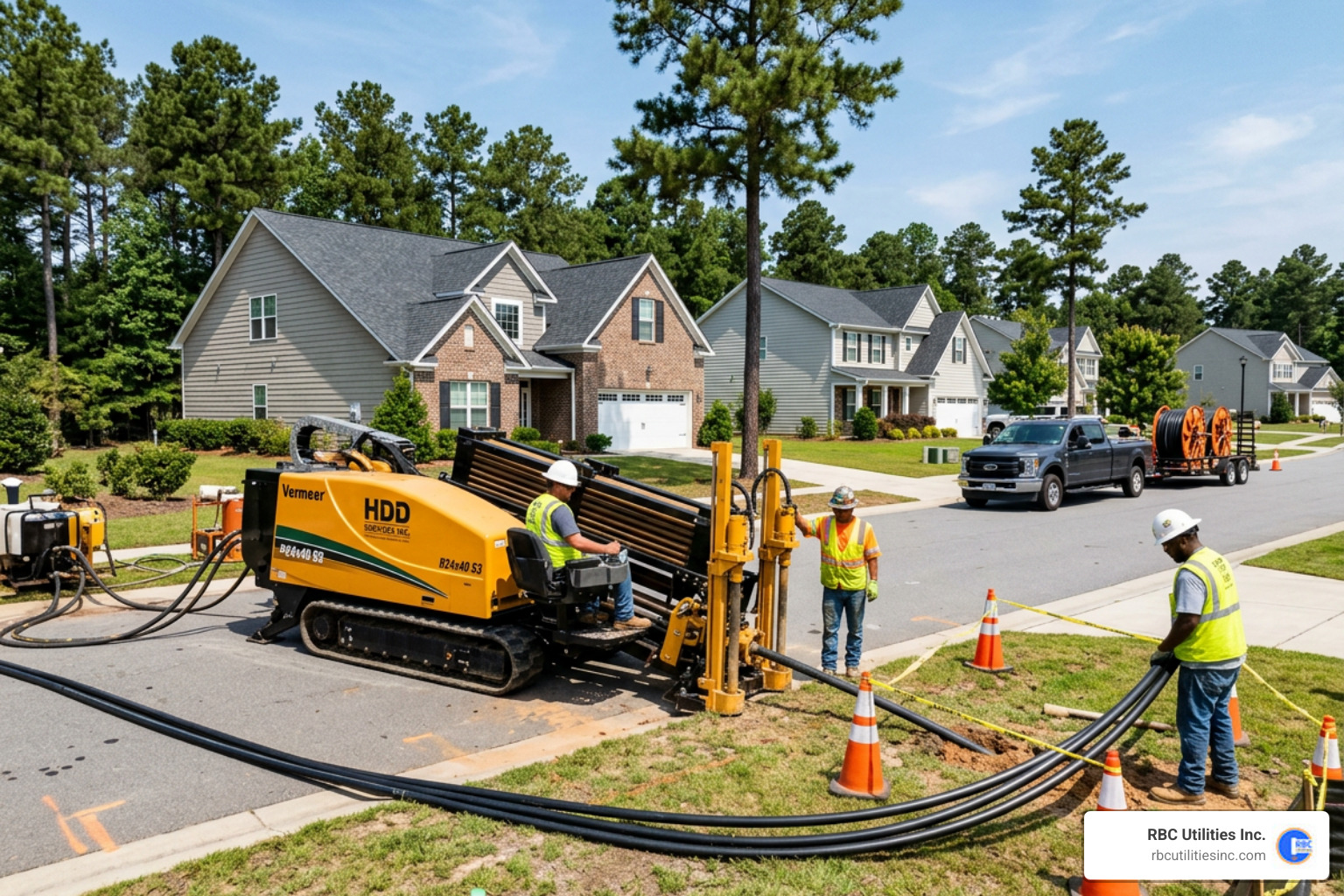
For most new developments where the land is clear, "open-cut" trenching is the standard. However, when we need to go under a busy Charlotte highway or a protected wetland, we turn to trenchless technology.
| Method | Best For... | Key Advantage |
|---|---|---|
| Open-Cut Trenching | New developments, greenfield sites | Lower cost, easier to inspect |
| Horizontal Directional Drilling (HDD) | Crossing roads, rivers, or existing structures | No surface disruption, faster for crossings |
| Hydrovac Excavation | Locating sensitive lines (Potholing) | Safest method; uses water to "dig" |
| Auger Boring | Large diameter pipes under railroads/roads | High precision for gravity lines |
Before we even start a machine, we use Subsurface Utility Exploration (SUE) and Ground-Penetrating Radar (GPR). Think of GPR as an X-ray for the ground. It helps us find "ghost lines"—old pipes that might not be on the official maps.
Another favorite tool in our kit is Hydrovac excavation. Instead of a metal bucket that could accidentally slice a gas line, we use pressurized water and a high-powered vacuum to gently expose existing utilities. This process, called "potholing," is a best practice for safety in crowded urban environments.
Safety isn't just a buzzword for us; it’s the law. In North Carolina, the Underground Utility Safety and Damage Prevention Act (Article 8A, Chapter 87) lays out exactly how everyone—from the homeowner to the large-scale contractor—must behave.
Every single underground utility installation NC project must start with a call to The 811 Process. NC 811 is the communication link between us and the utility owners.
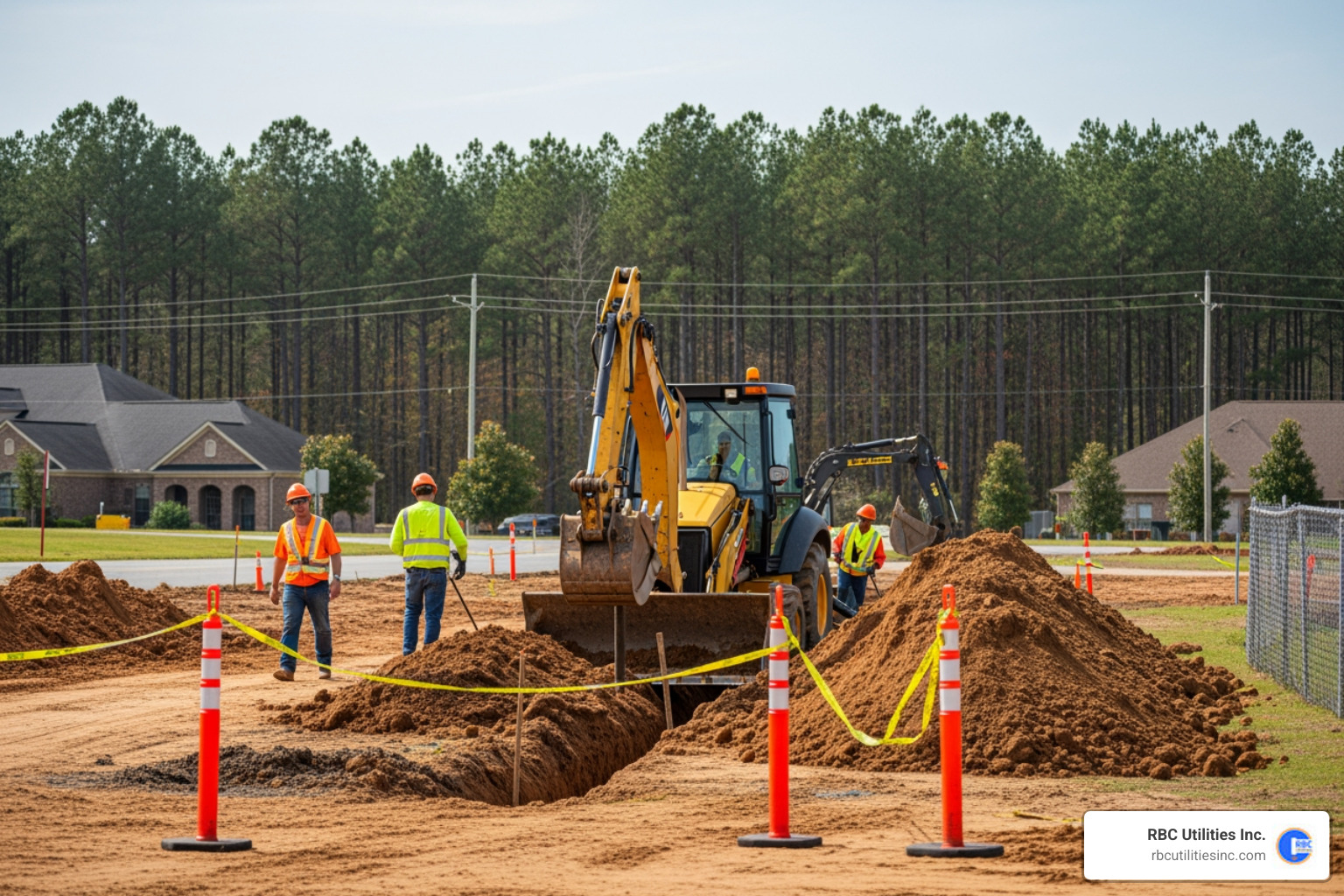
When a utility is marked with paint or flags, that mark isn't 100% exact. The law defines a Tolerance Zone, which is the width of the facility plus 24 inches on either side. Inside this zone, we are required to use "non-invasive" digging methods—like hand tools or vacuum excavation—until we visually confirm exactly where the pipe is.
If you walk onto one of our sites, you’ll see a rainbow of colors. We follow the national standard:
For more details on the legal side, you can review the full North Carolina Law online. Private lines (like the power line running from a meter to a backyard shed) are not marked by 811; we have to hire private locators for those!
Managing an underground utility installation NC project is like conducting an orchestra. Everything has to happen in a specific order, or you'll end up with a noisy, expensive mess.
North Carolina presents some unique hurdles. In the Piedmont region (like Charlotte), we often hit hard rock. This requires specialized rock trenching equipment or, in some cases, controlled blasting. Blasting is highly regulated; we have to monitor seismograph readings if we are within 500 feet of other utilities.
In other areas, we deal with unstable soil or a high water table. This requires "dewatering"—using pumps to keep the trench dry while we work. We also have to be mindful of external corrosion. If we are installing ductile iron pipe near gas lines, we might use "polyethylene encasement" (basically a giant plastic sleeve) to protect the pipe from stray electrical currents.
When vetting contractors for underground utility installation NC, look for these "must-haves":
You must notify NC 811 at least 3 to 12 full working days before you start. For underwater (subaqueous) work, it's 10 to 20 days. Weekends and holidays don't count as "working days," so plan your schedule accordingly! Once a ticket is called in, it generally stays "alive" for 15 working days before it needs to be refreshed.
The "Unlimited Public Utilities" license is the gold standard. It signifies that the North Carolina Licensing Board for General Contractors has vetted the company's financials and experience. It allows us to bid on and execute large-scale municipal and commercial projects without a "cap" on the contract dollar amount. It’s your assurance that we have the bonding capacity and expertise to see a project through to completion.
We verify compaction through geotechnical testing. The industry standard is 95% Standard Proctor density (following AASHTO T99 standards). Basically, a technician uses a nuclear gauge or other device to ensure the soil is packed tightly enough to support weight. We typically perform these tests every 1,000 feet of utility installation to ensure consistency across the entire site.
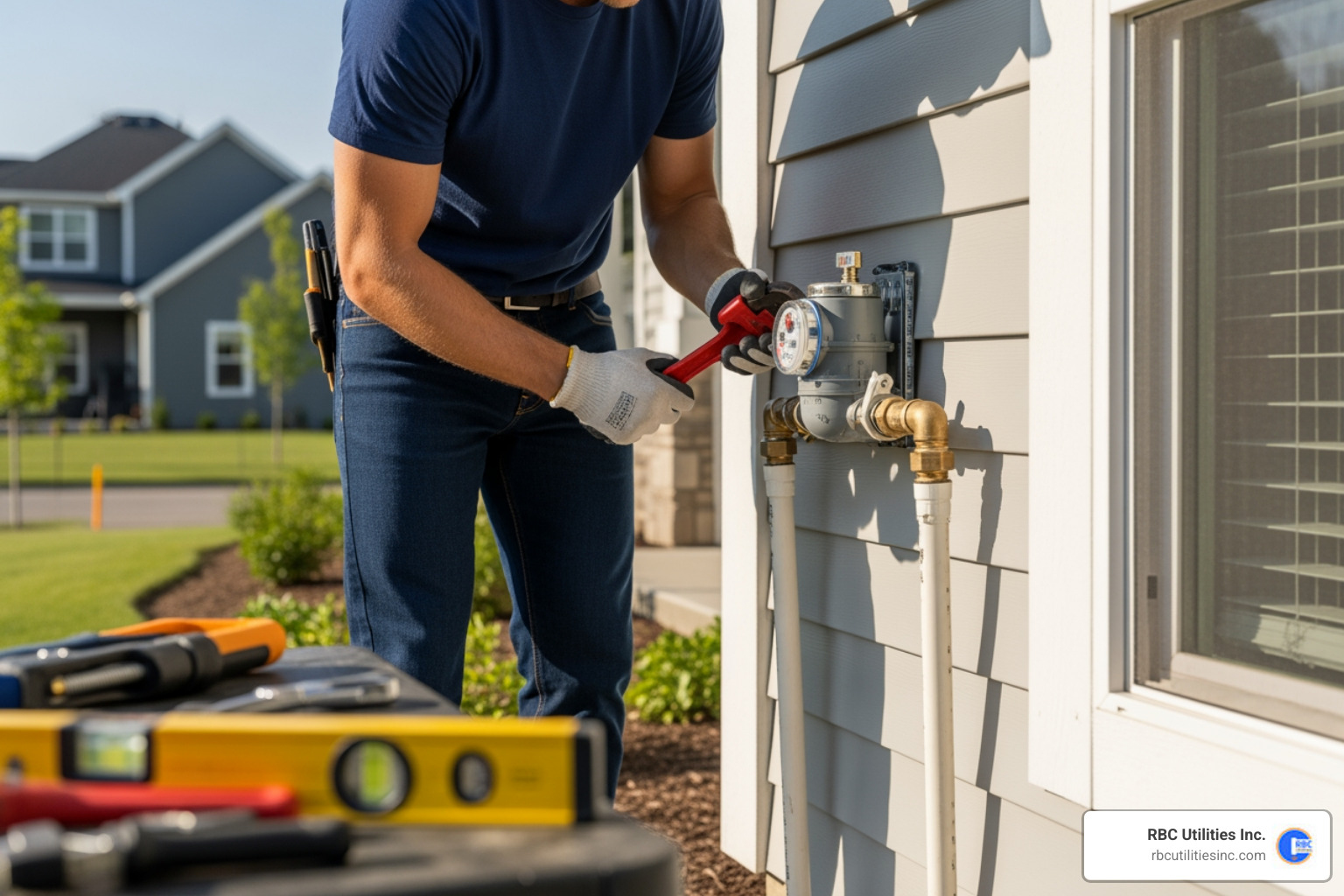
At RBC Utilities Inc., we understand that underground utility installation NC is the foundation of every successful development. Whether we are laying miles of water main or installing a complex stormwater system, our focus is always on safety, reliability, and long-term performance.
As part of the Saga Infrastructure family, we combine local Carolinas knowledge with national-scale resources. This allows us not only to deliver top-tier results for our clients but also to provide lasting, meaningful careers for our team members.
If you are planning a project in North Carolina or South Carolina and need a partner who knows the local soil, the local laws, and the local people, we are here to help. More info about our services is just a click away. Let's build something that lasts together.
Part of Saga Infrastructure, protecting what others built and helping it grow.
Address: 4404 Stuart Andrews Blvd., Suite K, Charlotte, NC 28217
Email: info@rbcutilitiesinc.com
Phone: 803-913-9727
Service Area: North Carolina | South Carolina